ALDC Enzyme Brewing for Diacetyl Control and Process Stability
Troubleshoot diacetyl, attenuation and filtration with ALDC, amylase, beta glucanase and amyloglucosidase guidance for industrial brewing.
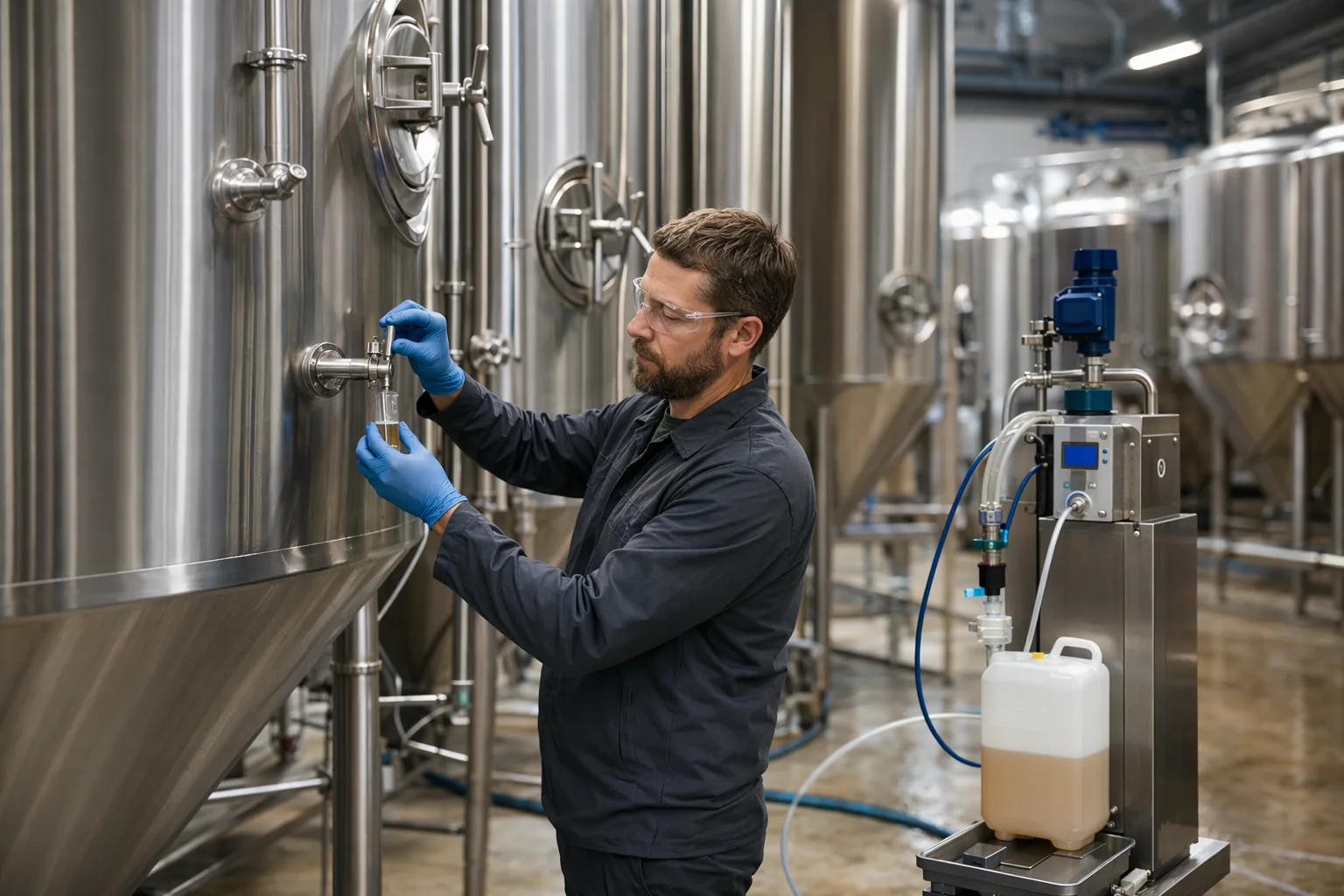
A practical B2B guide for breweries evaluating ALDC enzyme brewing programs, including dosage ranges, process conditions, QC checks, and supplier qualification steps.
When ALDC Enzyme Brewing Solves a Real Production Problem
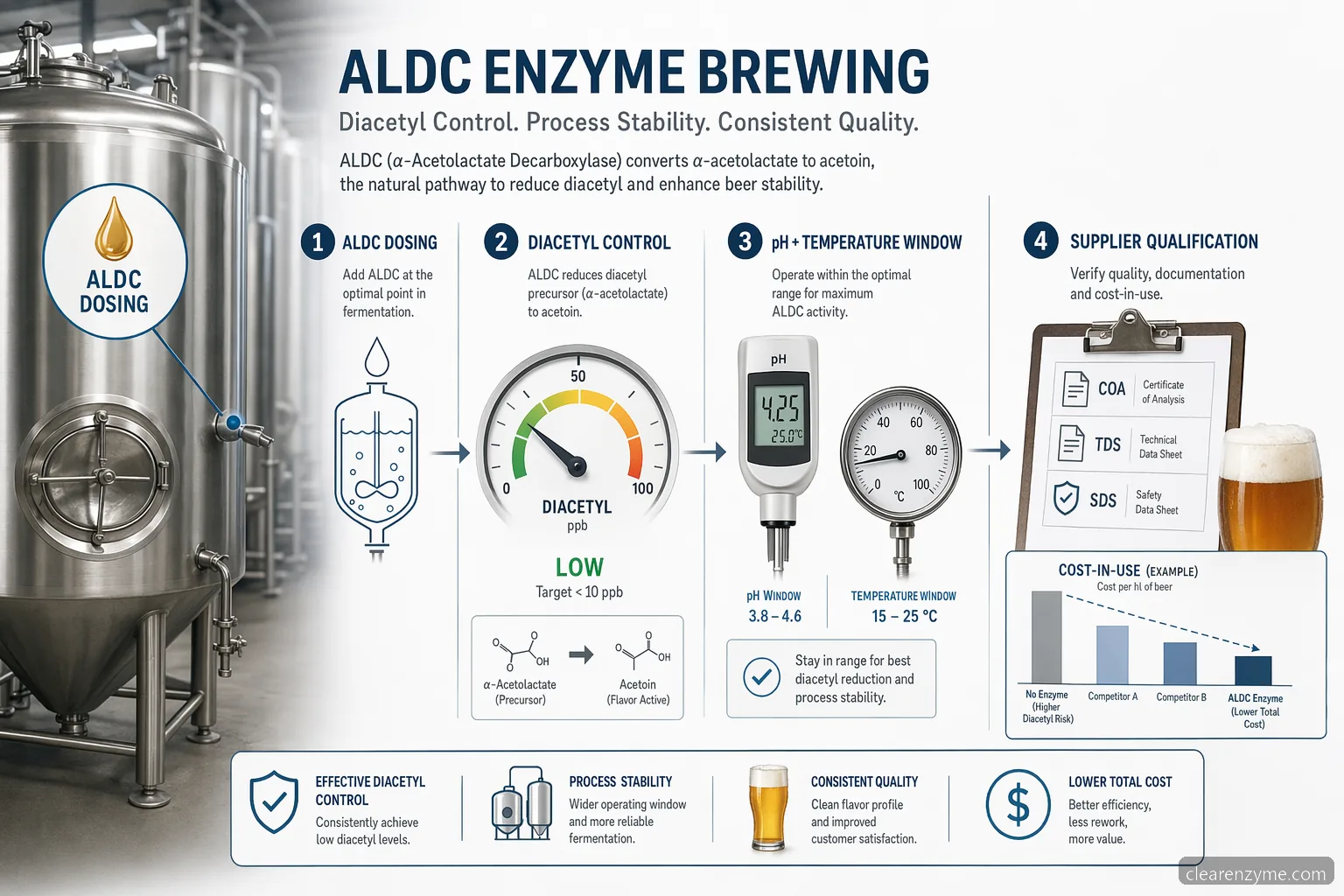
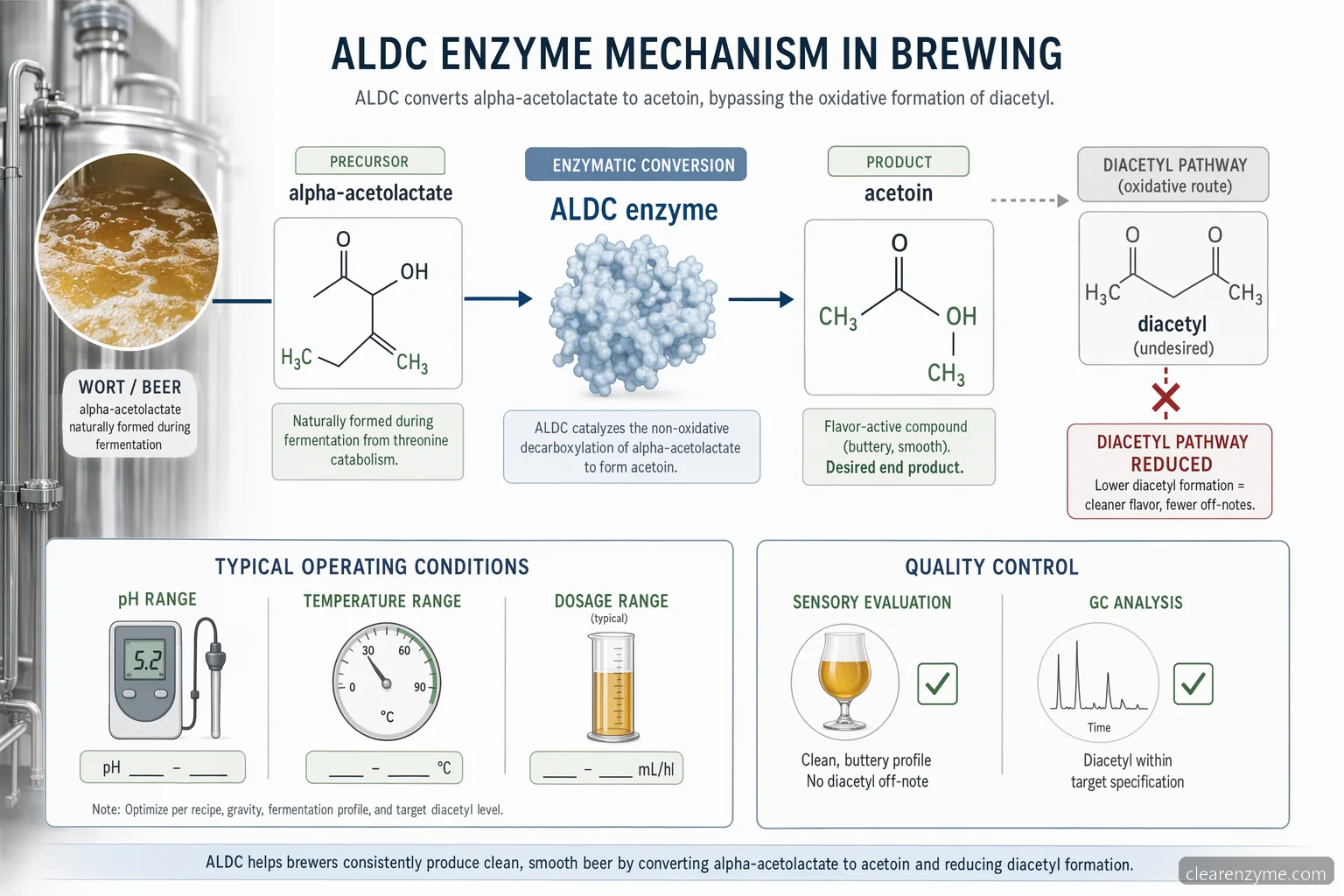
ALDC, or alpha-acetolactate decarboxylase, is used in brewing to manage diacetyl risk. It converts alpha-acetolactate into acetoin before alpha-acetolactate can oxidize into diacetyl, helping breweries shorten maturation time or stabilize flavor when production schedules are tight. It is not a substitute for healthy yeast management, oxygen control, or temperature discipline, but it can be a valuable processing aid when diacetyl peaks vary between batches. Typical use cases include lagers with long maturation constraints, high-throughput ale production, high-gravity brewing, and fermentations where a consistent sensory release point is difficult to maintain. For B2B buyers, the key question is not only whether an aldc brewing enzyme works, but whether it works predictably in the brewery’s wort, yeast strain, tank geometry, and QA program.
Primary target: lower diacetyl formation potential • Common addition point: yeast pitch or early fermentation • Best evaluated with forced diacetyl testing • Most useful where maturation time is a bottleneck
Dosage Bands, pH, and Temperature Starting Points
For ALDC enzyme brewing trials, start with the supplier’s activity-based recommendation rather than copying another brewery’s gram dosage. Commercial products vary in enzyme concentration, carrier, and liquid or powder format. A common screening range is 0.5 to 5 g/hL, or the supplier’s equivalent activity unit rate, added into cooled wort or fermenter during yeast pitching. ALDC generally fits normal brewing fermentation conditions, often around pH 4.0 to 5.5 during active fermentation and typical lager or ale temperatures. Avoid adding it into hot wort unless the TDS confirms thermal stability. Record wort gravity, FAN, yeast pitch rate, oxygenation, fermentation temperature, and time-to-terminal gravity because these factors influence diacetyl outcomes. Confirm performance with forced diacetyl testing, sensory panel review, and finished beer specifications before changing production schedules.
Use supplier activity units for final dosage decisions • Trial multiple rates before full-scale implementation • Check compatibility with yeast, finings, filtration, and pasteurization • Retain production lots for traceability
Troubleshooting Attenuation with Amylase and Amyloglucosidase
ALDC controls a flavor precursor; it does not create fermentable extract. If the issue is low attenuation, high residual dextrin, or inconsistent final gravity, consider an amylase enzyme for brewing or an amyloglucosidase enzyme brewing program. Alpha amylase is commonly used in mashing or cereal cooking to liquefy starch and generate shorter dextrins. Typical mash applications are around pH 5.2 to 5.8, with temperature selected by enzyme type, often in the 63 to 75°C range for thermostable products. Amyloglucosidase, also called glucoamylase, releases glucose from dextrins and is used for high-attenuation beer, low-carbohydrate beer, or distilling wash. It may be used in mash conversion or fermentation depending on the product. Buyers searching how to use amylase enzyme in brewing should validate iodine conversion, fermentability, RDF, alcohol yield, and flavor impact.
Alpha amylase: starch liquefaction and dextrin reduction • Amyloglucosidase: higher fermentability and lower residual extract • Glucoamylase brewing trials should include sensory review • Overdosing may shift body, dryness, and alcohol balance
Improving Lautering and Filtration with Beta Glucanase
A beta glucanase enzyme brewing program is aimed at wort separation, viscosity, and filtration performance rather than diacetyl. High beta-glucan malt, unmalted grains, rye, oats, wheat, or raw adjuncts can increase viscosity and slow lautering or membrane filtration. Beta glucanase helps break down beta-glucans that contribute to poor run-off and haze load. Typical application windows are product-specific, but many brewing beta glucanases are evaluated near pH 4.5 to 5.5 and 45 to 60°C in mash or pre-lauter steps. For troubleshooting, compare control and treated batches using lauter time, wort turbidity, viscosity, extract recovery, filter differential pressure, and beer clarity. A beer clarification enzyme may also be needed downstream, but the root cause should be confirmed before adding multiple aids.
Useful for difficult malt lots and high-adjunct recipes • Measure viscosity and lauter performance, not only yield • Confirm foam, mouthfeel, and haze impact • Coordinate with existing clarification and stabilization aids
B2B Procurement: COA, TDS, SDS, and Cost-in-Use
Industrial enzyme purchasing should include technical and commercial qualification, not just price per kilogram. Ask brewing enzyme distributors or direct manufacturers for a current COA, TDS, SDS, recommended storage conditions, activity definition, shelf-life statement, allergen or processing-aid information where applicable, and lot traceability format. The TDS should specify application pH, temperature, dosage, inactivation guidance, and handling limits. The COA should identify the lot and relevant activity or quality parameters. Calculate cost-in-use per hL, per fermenter, or per hectoliter-degree Plato, including labor, tank time, filtration improvement, extract gain, or maturation reduction. Before approval, run pilot validation at representative scale, then one controlled production trial. Supplier qualification should also review responsiveness, documentation quality, lead time, packaging integrity, and consistency across lots.
Compare activity-normalized cost, not only unit price • Request COA, TDS, and SDS before trial approval • Define acceptance criteria before pilot brewing • Keep retain samples from approved enzyme lots
Technical Buying Checklist
Buyer Questions
ALDC is most commonly added at yeast pitch or early fermentation so it can act on alpha-acetolactate before it oxidizes into diacetyl. The exact point should follow the supplier TDS and be validated in your process. Avoid hot-side addition unless the product is specifically rated for that temperature. Confirm results with forced diacetyl testing and sensory release criteria.
ALDC can reduce diacetyl formation potential, but it should not be treated as a universal replacement for fermentation control. Yeast health, pitch rate, oxygenation, temperature profile, and contamination control still matter. Some breweries use ALDC to shorten maturation or reduce variability, but any change to diacetyl rest timing should be proven by pilot and production validation.
ALDC targets flavor stability by acting on alpha-acetolactate, a diacetyl precursor. Amylase enzyme brewing products target starch and dextrin conversion. Alpha amylase helps liquefy starch, while amyloglucosidase or glucoamylase brewing enzymes increase fermentability by releasing glucose. They solve different problems, so troubleshooting should begin with the defect: diacetyl, attenuation, lauter speed, or clarity.
Ask for the COA, TDS, SDS, activity definition, dosage guidance, storage conditions, shelf-life, packaging options, and lot traceability. For industrial supply, also confirm technical support, lead time, sample availability, and consistency between lots. Compare cost-in-use per hL or per tank, not only purchase price, because enzyme concentration and process savings can vary significantly.
Run a controlled pilot with at least one untreated control and two dosage levels. Keep the same wort, yeast, oxygenation, temperature, and fermentation profile where possible. Measure forced diacetyl, sensory results, time to release, final gravity, pH, and any filtration or foam changes. If the pilot meets acceptance criteria, repeat at production scale before updating SOPs.
Brewing & Winemaking Enzymes for Research & Industry
Need Brewing & Winemaking Enzymes for your lab or production process?
ISO 9001 certified · Food-grade & research-grade · Ships to 80+ countries
Frequently Asked Questions
What is the best addition point for ALDC enzyme in brewing?
ALDC is most commonly added at yeast pitch or early fermentation so it can act on alpha-acetolactate before it oxidizes into diacetyl. The exact point should follow the supplier TDS and be validated in your process. Avoid hot-side addition unless the product is specifically rated for that temperature. Confirm results with forced diacetyl testing and sensory release criteria.
Can ALDC replace a diacetyl rest?
ALDC can reduce diacetyl formation potential, but it should not be treated as a universal replacement for fermentation control. Yeast health, pitch rate, oxygenation, temperature profile, and contamination control still matter. Some breweries use ALDC to shorten maturation or reduce variability, but any change to diacetyl rest timing should be proven by pilot and production validation.
How is ALDC different from amylase enzyme brewing products?
ALDC targets flavor stability by acting on alpha-acetolactate, a diacetyl precursor. Amylase enzyme brewing products target starch and dextrin conversion. Alpha amylase helps liquefy starch, while amyloglucosidase or glucoamylase brewing enzymes increase fermentability by releasing glucose. They solve different problems, so troubleshooting should begin with the defect: diacetyl, attenuation, lauter speed, or clarity.
What should breweries ask brewing enzyme distributors for before buying?
Ask for the COA, TDS, SDS, activity definition, dosage guidance, storage conditions, shelf-life, packaging options, and lot traceability. For industrial supply, also confirm technical support, lead time, sample availability, and consistency between lots. Compare cost-in-use per hL or per tank, not only purchase price, because enzyme concentration and process savings can vary significantly.
How should a brewery validate an ALDC brewing enzyme?
Run a controlled pilot with at least one untreated control and two dosage levels. Keep the same wort, yeast, oxygenation, temperature, and fermentation profile where possible. Measure forced diacetyl, sensory results, time to release, final gravity, pH, and any filtration or foam changes. If the pilot meets acceptance criteria, repeat at production scale before updating SOPs.
Related: Brewing enzymes market solutions for clearer, faster production
Turn This Guide Into a Supplier Brief Request COA, TDS, SDS, dosage guidance, and a pilot sample for your brewery’s ALDC enzyme validation. See our application page for Brewing enzymes market solutions for clearer, faster production at /applications/brewing-enzymes-market/ for specs, MOQ, and a free 50 g sample.
Contact Us to Contributehello@mail.clearenzyme.com