Amylase Brewing Enzyme for Industrial Brewing Formulations
Optimize starch conversion, attenuation, and filterability with amylase enzyme brewing guidance for B2B beer, wort, and distilling processes.
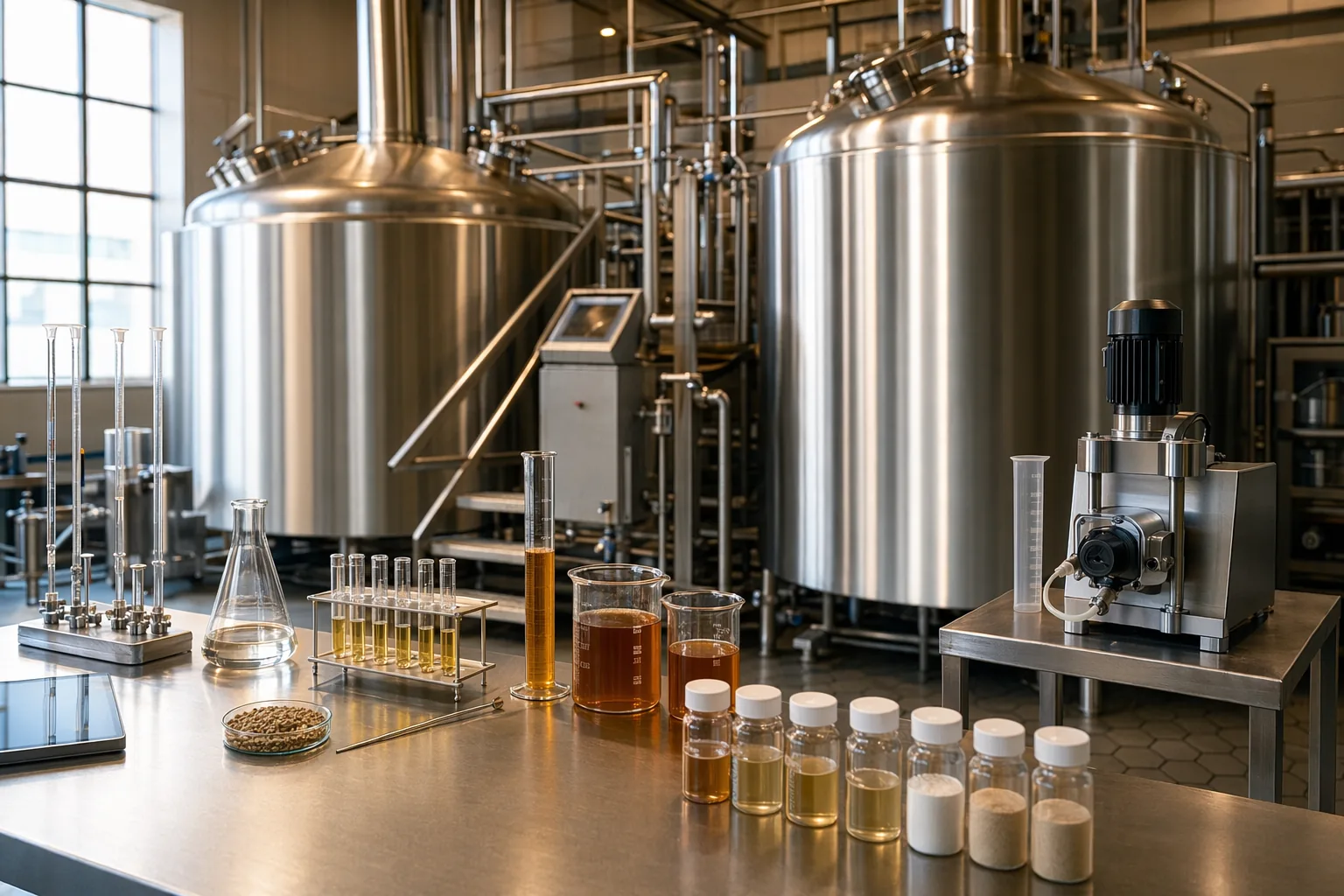
Improve extract yield, fermentability, and process consistency with application-focused amylase brewing enzyme selection, dosing, and validation guidance.
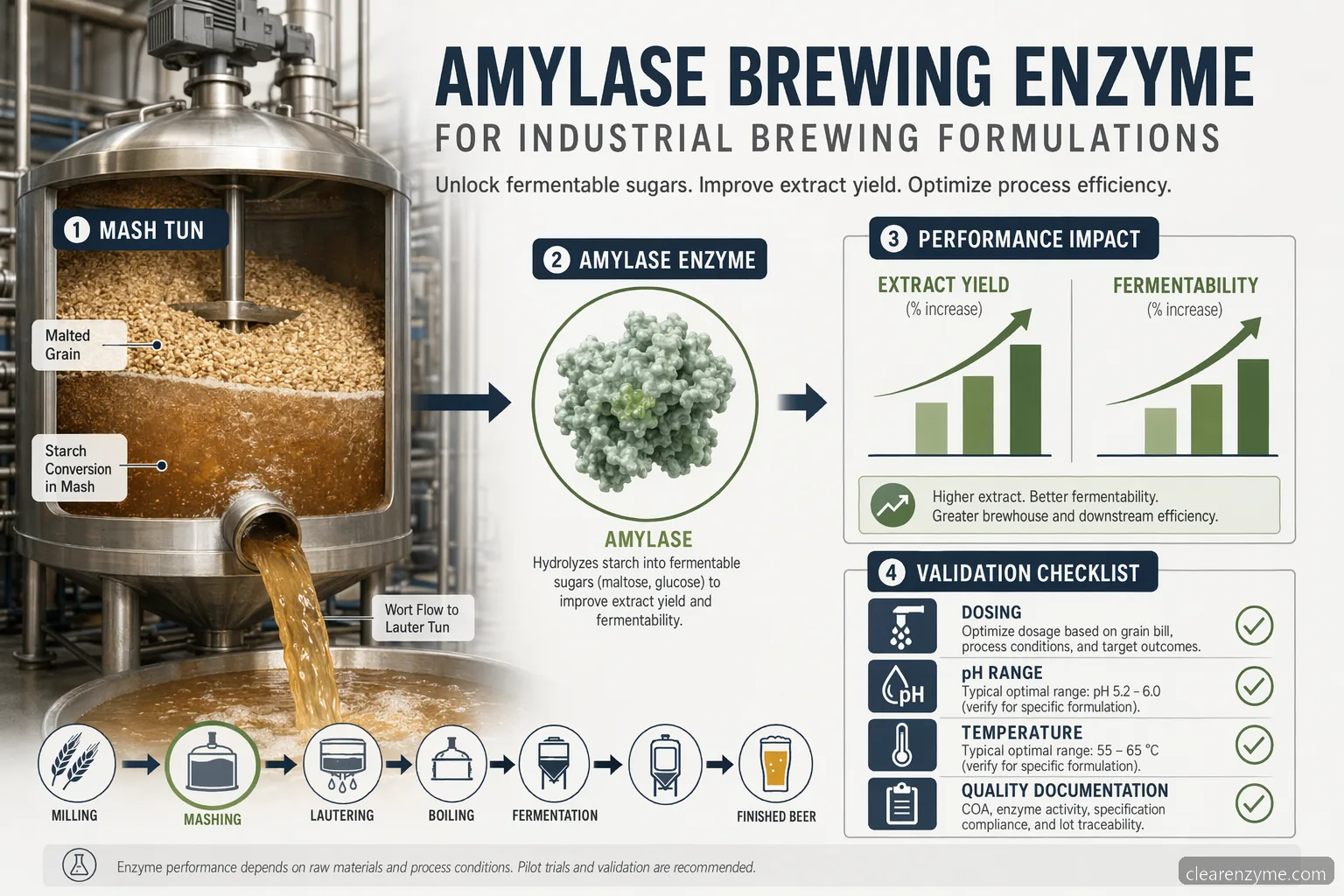
Why Amylase Matters in Brewing Formulations
An amylase brewing enzyme converts starch and dextrins into fermentable and non-fermentable sugars that shape extract, attenuation, mouthfeel, and process yield. In all-malt brewing, native malt enzymes often provide sufficient activity, but high-adjunct recipes, variable malt quality, low-temperature mashes, or high-gravity processes may require supplemental amylase enzyme for brewing. Industrial brewers use these enzymes to reduce viscosity, support consistent wort fermentability, and improve brewhouse predictability across raw material changes. For B2B formulation work, the goal is not simply maximum conversion; it is controlled conversion aligned with beer style, yeast performance, sensory targets, and filtration requirements. The correct enzyme depends on substrate, mash schedule, pH, temperature exposure, and whether the target is liquefaction, saccharification, or increased fermentability during fermentation.
Supports starch liquefaction and dextrin conversion • Helps manage adjunct and high-gravity brewing variability • Improves formulation control when malt quality changes
Choosing Alpha Amylase, Fungal Alpha Amylase, or Glucoamylase
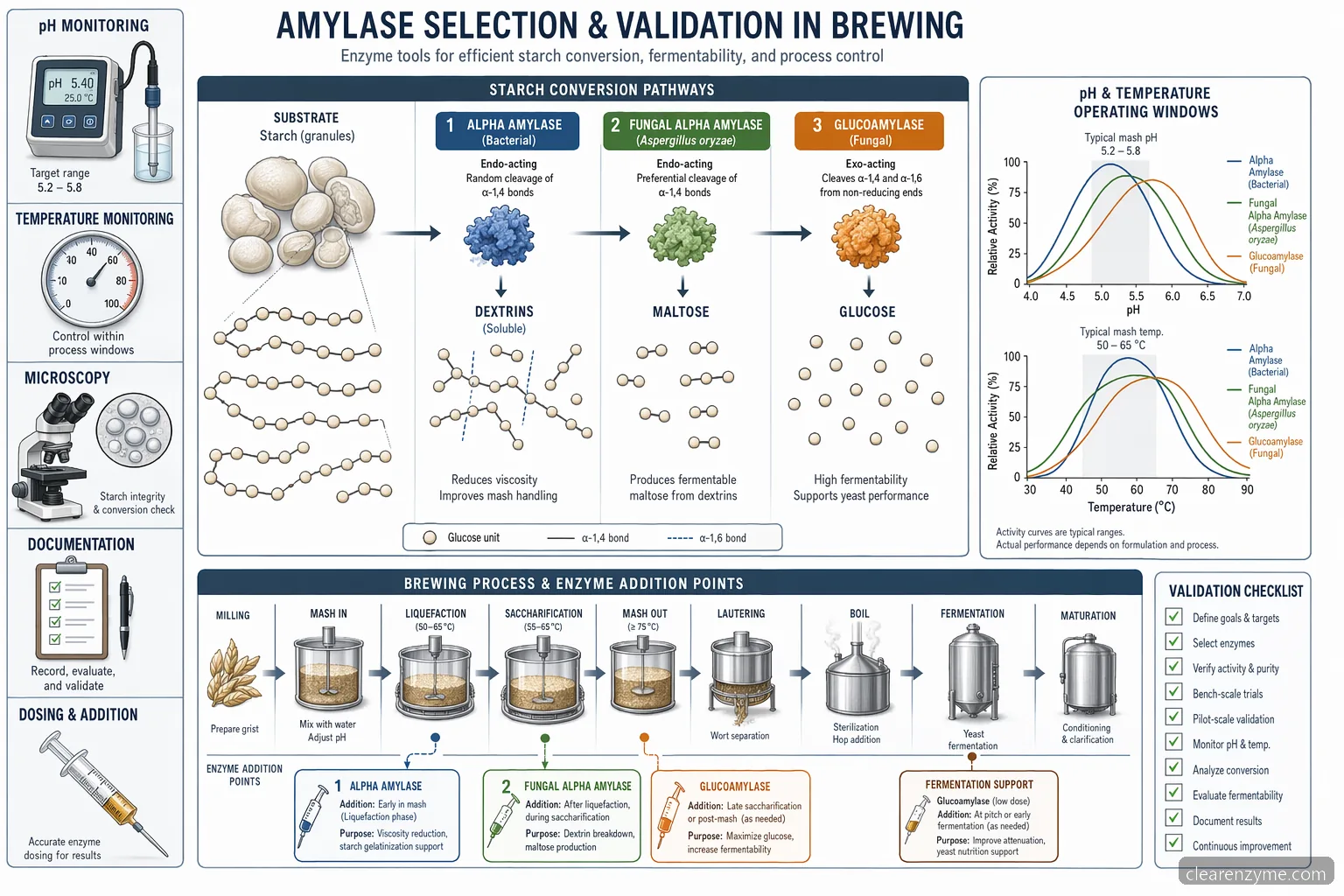
Alpha amylase enzyme brewing applications typically focus on liquefaction: reducing long starch chains into shorter dextrins during mashing or cereal cooking. Thermostable bacterial alpha amylase is often selected for high-temperature adjunct cooking or liquefaction, while fungal alpha amylase enzyme brewing products are commonly used at milder mash temperatures where controlled dextrin breakdown is preferred. Glucoamylase brewing enzymes are different: they release glucose from dextrins and can increase apparent attenuation, making them useful for highly fermentable wort, low-carbohydrate beer concepts, or distilling mashes. Because enzyme activity units, thermal stability, and pH optima vary by supplier, buyers should compare technical data sheets rather than dosage alone. A robust formulation screen usually tests at least two inclusion rates and one reduced-contact-time condition to confirm performance margin.
Alpha amylase: liquefaction and viscosity reduction • Fungal alpha amylase: moderate-temperature saccharification support • Glucoamylase: higher fermentability and glucose release
Typical Process Conditions and When to Add
The question of amylase enzyme brewing when to add depends on enzyme class and process objective. For liquefaction, alpha amylase is commonly added to the mash-in water, cereal cooker, or early mash stage so starch is exposed while it gelatinizes. Many brewing alpha amylases work around pH 5.2 to 5.8, with fungal alpha amylase often performing near 50 to 60°C and thermostable alpha amylase at higher cooking temperatures, depending on product design. Glucoamylase is commonly added during saccharification or fermentation, often around pH 4.0 to 5.0 and temperature ranges defined by the supplier. Dosage bands may start around 0.01% to 0.10% of grist or equivalent activity-based rates, but final dosage should be set by pilot trials, not generic use rates.
Add alpha amylase early for starch liquefaction • Add glucoamylase for higher fermentability or attenuation • Confirm hold time, pH, and temperature from the TDS
How to Use Amylase Enzyme in Brewing Trials
A practical trial plan for how to use amylase enzyme in brewing starts with a control brew, a low dose, and a target dose using the same grist, liquor ratio, mash schedule, and yeast conditions. Track mash pH, iodine conversion, wort gravity, viscosity, FAN where relevant, fermentability, final gravity, alcohol yield, turbidity, filtration rate, and sensory impact. If using amylase enzyme brewing with adjuncts such as corn, rice, wheat, sorghum, or unmalted barley, verify that starch gelatinization and enzyme contact time are sufficient. Over-conversion may thin body or push attenuation beyond the intended beer profile, so formulation trials should include finished-beer evaluation, not only brewhouse yield. For commercial adoption, scale-up should confirm pump shear, dosing accuracy, mixing uniformity, and enzyme deactivation or carryover expectations.
Run control, low-dose, and target-dose brews • Measure extract, viscosity, attenuation, and filtration • Validate sensory profile before full-scale adoption
Quality Documentation for Industrial Buyers
For B2B procurement, an amylase enzyme brewing supplier should provide a current certificate of analysis, technical data sheet, and safety data sheet for each commercial product. The COA should identify lot number, declared activity or activity range, appearance, microbiological limits where applicable, and release criteria. The TDS should define recommended pH, temperature, dosage guidance, storage, handling, and activity assay basis. The SDS supports safe receiving, warehousing, and plant use. Supplier qualification may also review manufacturing location, change-control process, traceability, allergen statements, food-use suitability, residual carriers, and regulatory support for the intended market. Avoid purchasing only on price per kilogram; enzyme concentration, activity stability, and performance in your grist system determine true cost-in-use.
Request COA, TDS, SDS, and lot traceability • Compare activity basis, not only product weight • Confirm change-control and application support
Cost-in-Use and Scale-Up Considerations
The commercial value of using amylase enzyme brewing products should be calculated through process economics rather than headline dosage. A higher-activity product may cost more per kilogram but reduce use rate, improve extract recovery, shorten mash or lautering time, or stabilize attenuation across malt lots. During scale-up, confirm dosing pump precision, dilution water quality, enzyme addition point, tank mixing, and residence time. Review whether the enzyme is heat-inactivated in normal wort boiling or remains relevant in fermentation, depending on the application. Cost-in-use models should include enzyme spend per hectoliter, extract gain, alcohol yield, filter throughput, tank cycle time, rework reduction, and quality consistency. Clear Enzyme supports buyers with formulation discussion, sample evaluation, and documentation review for brewing, winemaking, and distilling enzyme applications.
Model enzyme cost per hectoliter or per ton of grist • Include extract gain, cycle time, and quality consistency • Confirm scale-up performance with pilot validation
Technical Buying Checklist
Buyer Questions
An amylase brewing enzyme is used to break starch and dextrins into smaller carbohydrates during brewing. Depending on the enzyme type, it can support liquefaction, improve extract recovery, reduce wort viscosity, increase fermentability, or help manage high-adjunct recipes. Industrial brewers typically evaluate it against targets such as original gravity, attenuation, filtration speed, final gravity, and finished-beer profile.
Choose an amylase enzyme for brewing by matching enzyme function to the process goal. Alpha amylase is generally used for liquefaction and viscosity reduction, fungal alpha amylase supports controlled saccharification at moderate temperatures, and glucoamylase increases glucose release and fermentability. Review the TDS for pH, temperature, dosage, activity basis, and stability, then confirm performance in pilot brews.
For mash use, add the enzyme where it has good contact with hydrated starch and enough residence time at its recommended pH and temperature. A typical trial compares a control with one or two activity-based dosages. Monitor iodine conversion, wort gravity, viscosity, and lautering behavior. Final dosage should be based on pilot results, raw material variability, and the desired beer profile.
Amylase enzyme brewing when to add depends on the enzyme. Alpha amylase is often added at mash-in, cereal cooking, or early mash stages for liquefaction. Fungal alpha amylase may be used during saccharification rests. Glucoamylase may be added during saccharification or fermentation when higher attenuation is desired. Always follow supplier guidance for temperature, pH, and hold time.
Before purchasing amylase enzyme brewing materials, request a certificate of analysis, technical data sheet, safety data sheet, activity method, shelf-life statement, storage guidance, and lot traceability. For supplier qualification, also review change-control practices, manufacturing location, food-use suitability, allergen statements where relevant, and technical support capability. These documents help compare suppliers beyond price per kilogram.
Brewing & Winemaking Enzymes for Research & Industry
Need Brewing & Winemaking Enzymes for your lab or production process?
ISO 9001 certified · Food-grade & research-grade · Ships to 80+ countries
Frequently Asked Questions
What is an amylase brewing enzyme used for?
An amylase brewing enzyme is used to break starch and dextrins into smaller carbohydrates during brewing. Depending on the enzyme type, it can support liquefaction, improve extract recovery, reduce wort viscosity, increase fermentability, or help manage high-adjunct recipes. Industrial brewers typically evaluate it against targets such as original gravity, attenuation, filtration speed, final gravity, and finished-beer profile.
How do you choose an amylase enzyme for brewing?
Choose an amylase enzyme for brewing by matching enzyme function to the process goal. Alpha amylase is generally used for liquefaction and viscosity reduction, fungal alpha amylase supports controlled saccharification at moderate temperatures, and glucoamylase increases glucose release and fermentability. Review the TDS for pH, temperature, dosage, activity basis, and stability, then confirm performance in pilot brews.
How to use amylase enzyme brewing products in a mash?
For mash use, add the enzyme where it has good contact with hydrated starch and enough residence time at its recommended pH and temperature. A typical trial compares a control with one or two activity-based dosages. Monitor iodine conversion, wort gravity, viscosity, and lautering behavior. Final dosage should be based on pilot results, raw material variability, and the desired beer profile.
When should amylase enzyme be added in brewing?
Amylase enzyme brewing when to add depends on the enzyme. Alpha amylase is often added at mash-in, cereal cooking, or early mash stages for liquefaction. Fungal alpha amylase may be used during saccharification rests. Glucoamylase may be added during saccharification or fermentation when higher attenuation is desired. Always follow supplier guidance for temperature, pH, and hold time.
What documents should a B2B buyer request before purchase?
Before purchasing amylase enzyme brewing materials, request a certificate of analysis, technical data sheet, safety data sheet, activity method, shelf-life statement, storage guidance, and lot traceability. For supplier qualification, also review change-control practices, manufacturing location, food-use suitability, allergen statements where relevant, and technical support capability. These documents help compare suppliers beyond price per kilogram.
Related: Brewing enzymes market solutions for clearer, faster production
Turn This Guide Into a Supplier Brief Request brewing enzyme samples, COA/TDS/SDS review, and pilot formulation support from Clear Enzyme. See our application page for Brewing enzymes market solutions for clearer, faster production at /applications/brewing-enzymes-market/ for specs, MOQ, and a free 50 g sample.
Contact Us to Contribute