Amylase Enzyme for Brewing: B2B Specification Checklist
Compare amylase enzyme for brewing by activity, pH, temperature, dosage, COA/TDS/SDS, pilot validation, and cost-in-use for breweries.
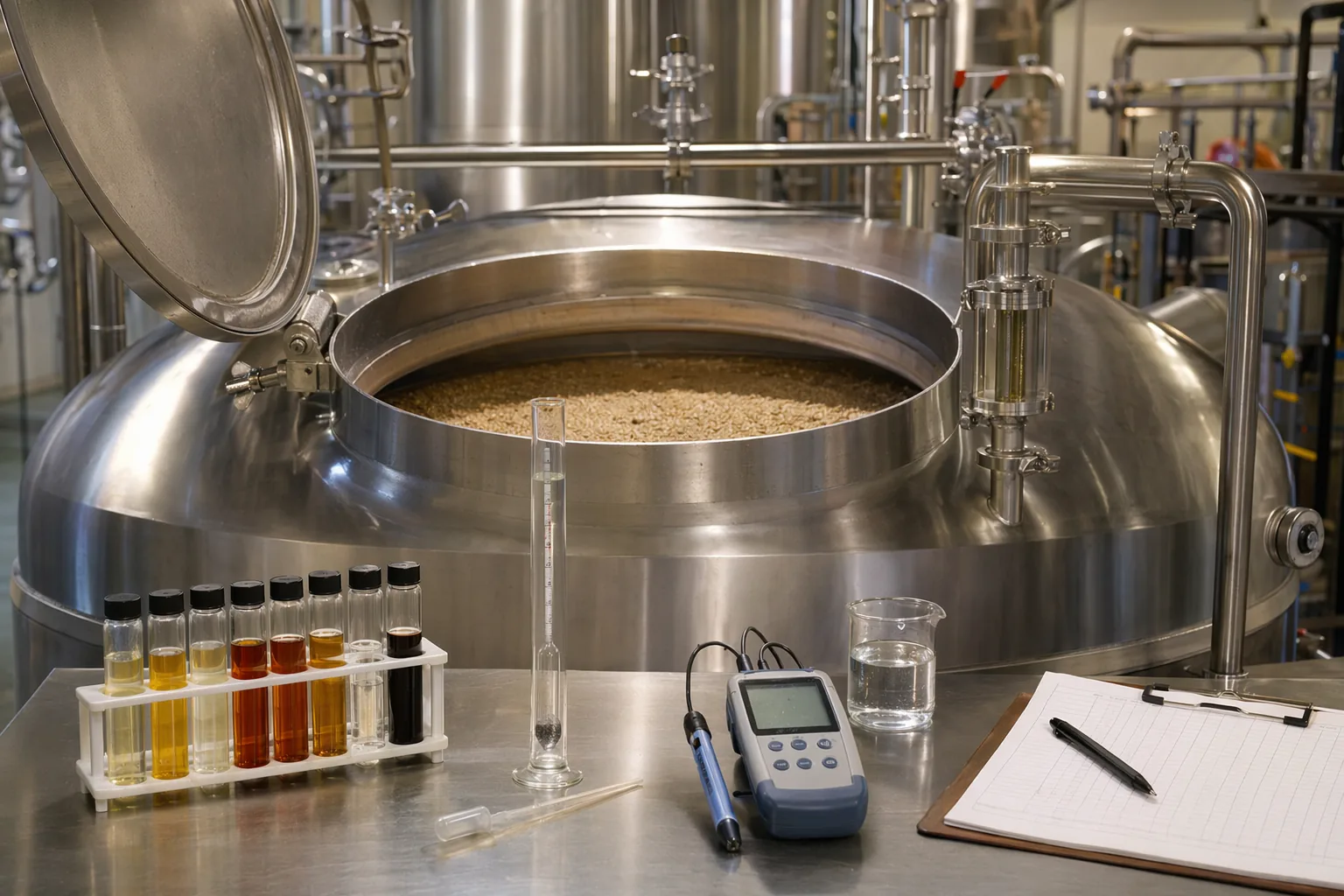
Compare alpha amylase, fungal amylase, and related brewing enzymes with the process data procurement teams need before scale-up.
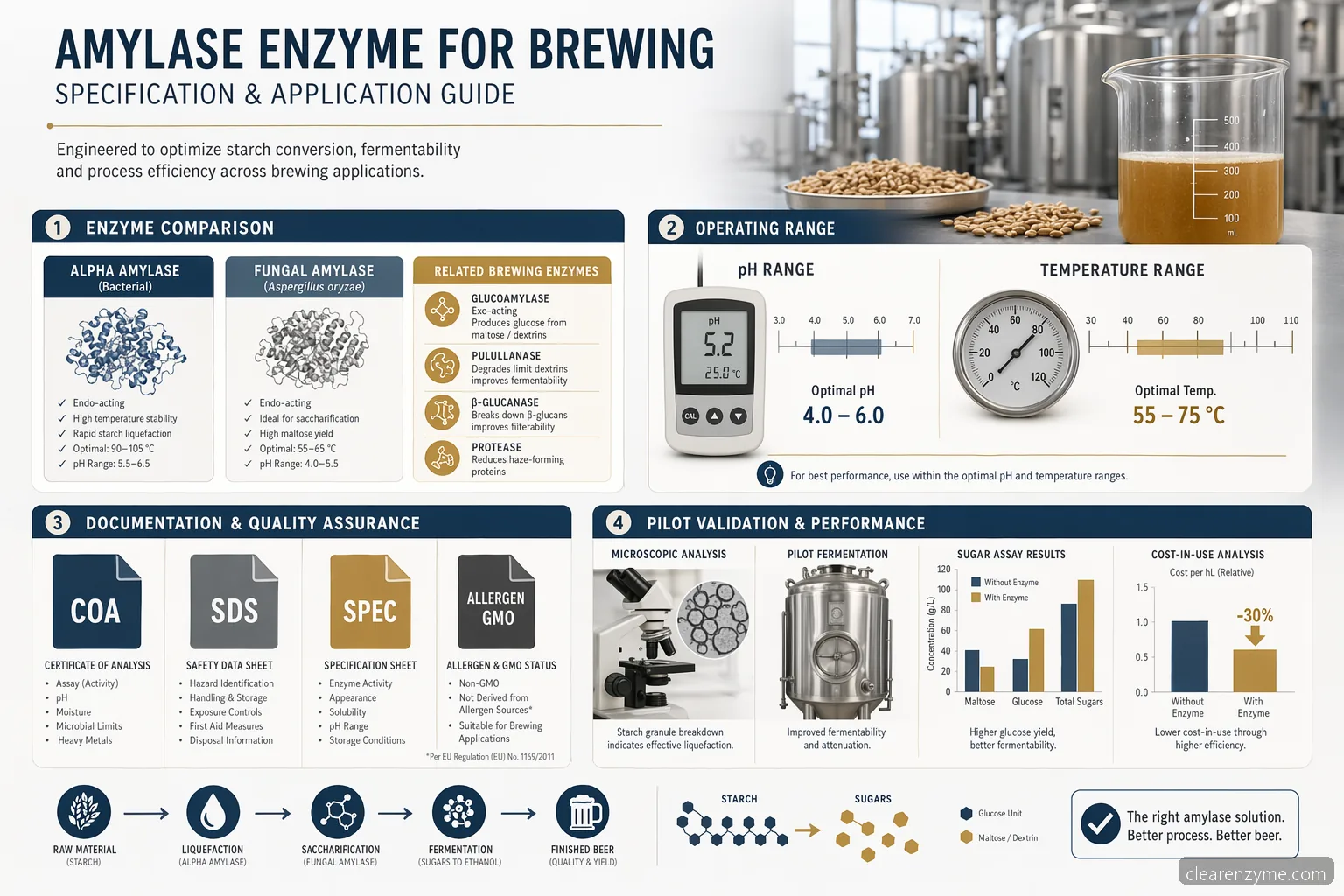
What Buyers Compare When Specifying Amylase
For commercial breweries, amylase enzyme for brewing is not a generic ingredient. It is a process aid selected to solve a defined conversion, yield, or attenuation requirement. Alpha amylase enzyme brewing applications typically focus on starch dextrinization and viscosity reduction, while glucoamylase and fungal alpha amylase enzyme brewing options are often evaluated where higher fermentability or lower residual dextrin is desired. Procurement and technical teams should compare enzyme type, declared activity, assay method, optimal pH and temperature, carrier system, regulatory suitability for the intended market, and batch-to-batch consistency. The best comparison is not price per kilogram; it is cost-in-use per hectoliter, per metric ton of grist, or per target extract gain. A qualified supplier should provide a current COA, TDS, SDS, shelf-life statement, storage conditions, and practical guidance for pilot validation under your own mash program.
Define the process target before requesting samples. • Compare activity units only when assay methods are equivalent. • Ask for lot traceability and change-control communication.
Choosing the Right Amylase Brewing Enzyme
The right amylase brewing enzyme depends on substrate, mash design, and beer specification. Thermostable bacterial alpha amylase is commonly used for adjunct liquefaction or high-temperature starch thinning, often around pH 5.6 to 6.2 and 85 to 95°C, subject to the product TDS. Fungal alpha amylase is generally milder and may suit cereal mashes or saccharification support around pH 4.5 to 5.5 and 50 to 60°C. Glucoamylase brewing products are used when the brewer wants more glucose formation and higher apparent attenuation, commonly in low-carbohydrate, high-adjunct, or distilling-related processes. In all cases, the supplier should explain enzyme side activities, inactivation conditions, and potential impact on fermentability and body. Using amylase enzyme brewing programs without these details can create inconsistent extract, unexpected dryness, or filtration changes.
Use alpha amylase for starch thinning and liquefaction. • Use fungal amylase for lower-temperature saccharification support. • Use glucoamylase when higher fermentability is required. • Confirm compatibility with malt enzymes and mash rests.
How to Use Amylase Enzyme in Brewing Trials
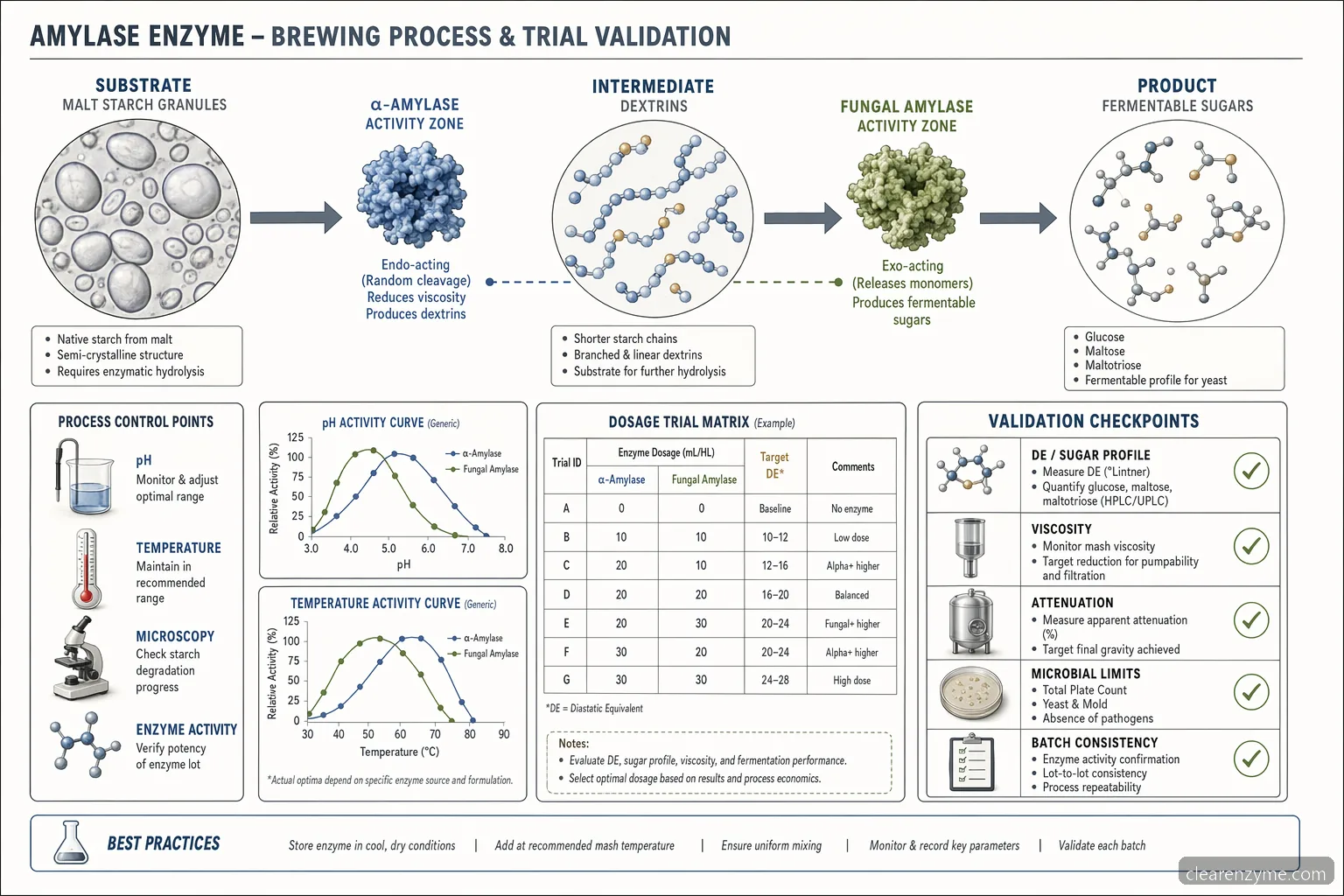
For pilot work, document how to use amylase enzyme in brewing before moving to production. Start with the supplier’s recommended dosage band, commonly expressed as grams per metric ton of grist, milliliters per hectoliter, or activity units per kilogram of starch. Many commercial trials begin in a conservative band such as 50 to 300 g per metric ton of grist, then adjust based on activity, adjunct level, and conversion data. Add the enzyme where temperature and pH match its operating window: into the cereal cooker, mash mixer, or saccharification rest depending on the product. Record mash pH, calcium level, temperature profile, residence time, extract, iodine reaction, wort viscosity, and fermentation performance. If the buyer asks, “amylase enzyme brewing when to add,” the answer should come from the enzyme TDS and the brewery’s validated process map.
Run a no-enzyme control and at least two dosage levels. • Hold temperature and pH within the declared operating range. • Track conversion, extract, viscosity, and attenuation. • Do not scale dosage by guesswork alone.
Quality Documents to Request from Suppliers
A B2B enzyme purchase should be supported by documentation, not only a sample bottle. The COA should identify the product name, batch or lot number, activity result, activity method where available, appearance, and release date. The TDS should state recommended application, operating pH and temperature, dosage guidance, storage conditions, shelf life, and handling notes. The SDS should address safe industrial handling, exposure controls, spill response, and transport information. For supplier qualification, request manufacturing location disclosure where appropriate, allergen and GMO status if relevant to your market, food-contact or food-processing suitability statements, and a process for notification of material changes. Avoid assuming that two brewing enzymes with similar names perform identically. Activity expression, concentration, formulation stability, and side activities can materially affect brewing economics and final beer profile.
COA confirms lot-specific release data. • TDS supports process engineering and dosing. • SDS supports safe workplace handling. • Supplier qualification should include change-control expectations.
QC Checks for Pilot and Production Validation
Pilot validation should connect enzyme use to measurable brewery outcomes. For amylase enzyme brewing trials, common QC checkpoints include mash pH, temperature hold accuracy, iodine conversion time, wort gravity, extract yield, fermentability, FAN observation, viscosity, lautering or filtration rate, yeast performance, alcohol yield, residual extract, and sensory neutrality. In high-adjunct brewing, pay close attention to starch carryover, haze risk, and filter loading. In highly fermentable beer designs, confirm that body, foam, and flavor targets remain acceptable. Production validation should include a defined acceptance range, not just a pass or fail note. Compare trial cost-in-use against gains in extract recovery, cycle time, filtration efficiency, or attenuation control. The best supplier can help interpret the data without overstating results beyond your raw materials and brewhouse conditions.
Set acceptance criteria before the trial. • Measure both conversion performance and downstream effects. • Include sensory review for finished beer. • Compare cost-in-use with operational benefit.
Cost-in-Use and Supplier Qualification
For industrial buyers, the lowest invoice price rarely identifies the best amylase enzyme for brewing. Cost-in-use should include recommended dosage, activity consistency, freight, storage stability, yield improvement, brew length impact, filtration changes, and waste reduction. A concentrated enzyme may cost more per kilogram but less per hectoliter if it delivers stable conversion at lower dosage. Supplier qualification should also evaluate technical responsiveness, sample availability, lead time, packaging sizes, documentation speed, and willingness to support pilot and scale-up work. Ask whether the supplier can provide comparable products for brewing, winemaking enzymes, beer clarification enzyme needs, and distilling applications if your facility buys across categories. A structured comparison helps purchasing, QA, and brewing teams select an enzyme partner that supports repeatable production rather than one-time spot buying.
Compare cost per hectoliter, not only price per kilogram. • Include freight, shelf life, and dosage variability. • Evaluate technical support before production scale-up. • Prefer suppliers with clear documentation workflows.
Technical Buying Checklist
Buyer Questions
Alpha amylase mainly breaks starch into shorter dextrins, helping liquefaction, mash conversion, and viscosity reduction. Glucoamylase releases glucose from dextrins and can increase fermentability and apparent attenuation. Breweries often compare them by target beer profile, adjunct level, mash program, and desired residual body. The correct choice depends on validated process data, not only the enzyme name.
The addition point should match the enzyme’s pH and temperature window. Some thermostable alpha amylases are added during cereal cooking or high-temperature liquefaction, while fungal amylases may be added during lower-temperature mash or saccharification rests. Confirm the recommendation in the TDS, then validate with pilot trials measuring conversion, extract, viscosity, fermentability, and downstream filtration.
Request a current COA, TDS, and SDS for the exact product and lot where possible. The COA should show release data and activity. The TDS should provide application, dosage, pH, temperature, storage, and shelf-life guidance. The SDS supports safe handling. Buyers should also ask about traceability, change-control communication, packaging, lead time, and technical support.
Compare quotations by cost-in-use, not only unit price. Include enzyme activity, expected dosage, freight, packaging, storage stability, shelf life, trial support, and consistency between lots. A higher-priced product may be more economical if it reduces dosage, improves extract, shortens processing time, or delivers more predictable attenuation. Always confirm assumptions with pilot validation under brewery conditions.
Brewing & Winemaking Enzymes for Research & Industry
Need Brewing & Winemaking Enzymes for your lab or production process?
ISO 9001 certified · Food-grade & research-grade · Ships to 80+ countries
Frequently Asked Questions
What is the difference between alpha amylase and glucoamylase in brewing?
Alpha amylase mainly breaks starch into shorter dextrins, helping liquefaction, mash conversion, and viscosity reduction. Glucoamylase releases glucose from dextrins and can increase fermentability and apparent attenuation. Breweries often compare them by target beer profile, adjunct level, mash program, and desired residual body. The correct choice depends on validated process data, not only the enzyme name.
How do you decide when to add amylase enzyme in brewing?
The addition point should match the enzyme’s pH and temperature window. Some thermostable alpha amylases are added during cereal cooking or high-temperature liquefaction, while fungal amylases may be added during lower-temperature mash or saccharification rests. Confirm the recommendation in the TDS, then validate with pilot trials measuring conversion, extract, viscosity, fermentability, and downstream filtration.
What documents should an industrial buyer request before ordering?
Request a current COA, TDS, and SDS for the exact product and lot where possible. The COA should show release data and activity. The TDS should provide application, dosage, pH, temperature, storage, and shelf-life guidance. The SDS supports safe handling. Buyers should also ask about traceability, change-control communication, packaging, lead time, and technical support.
How should breweries compare enzyme supplier quotations?
Compare quotations by cost-in-use, not only unit price. Include enzyme activity, expected dosage, freight, packaging, storage stability, shelf life, trial support, and consistency between lots. A higher-priced product may be more economical if it reduces dosage, improves extract, shortens processing time, or delivers more predictable attenuation. Always confirm assumptions with pilot validation under brewery conditions.
Related: Brewing enzymes market solutions for clearer, faster production
Turn This Guide Into a Supplier Brief Request a brewing enzyme specification review, sample plan, and documentation package for your pilot trial. See our application page for Brewing enzymes market solutions for clearer, faster production at /applications/brewing-enzymes-market/ for specs, MOQ, and a free 50 g sample.
Contact Us to Contribute