Brewing Enzymes for Reliable Fermentation, Yield, and Clarification
Source brewing enzymes for beer, wine, and spirits with guidance on process fit, dosage, QC, COA/TDS/SDS, trials, and cost-in-use.
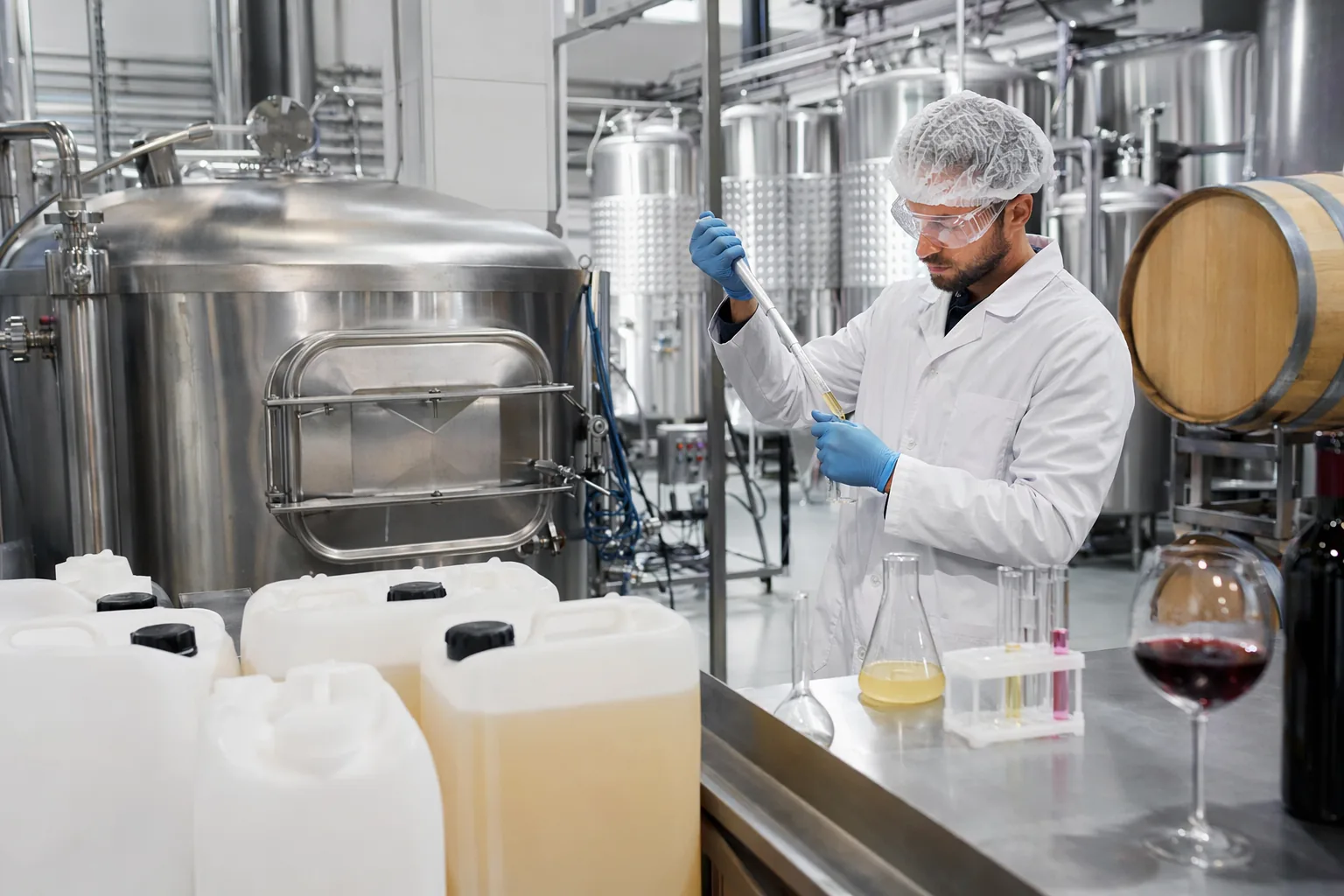
The enzymes on this site are used in beer, wine, cider and mead production to clear chill haze, improve filterability and steady fermentation, and ClearEnzyme sells them to commercial breweries, wineries and beverage manufacturers. Orders are bulk: 25 kg minimum, shipped as liquid or powder in 25 kg drums or 200 L barrels, priced by quotation for each application and volume. Request a quote via the contact form with your beverage type, batch size and the clarity or filtration problem you want solved. ClearEnzyme supports breweries, wineries, and distilleries with industrial enzyme sourcing guidance for mash conversion, attenuation control, filtration improvement, and beverage clarity.
How Brewing Enzymes Create Value in Commercial Production
The role of enzymes in brewing process optimization is to convert raw material components more predictably than thermal processing alone. In beer production, amylases help break starch into fermentable sugars, proteases can support wort separation and foam-related balance, beta-glucanase may reduce viscosity from barley or adjuncts, and beer clarification enzyme solutions can target haze-forming compounds. In distilling, glucoamylase brewing applications are often adapted to maximize fermentable glucose from liquefied starch. For winemaking, pectinase and related activities support juice extraction, settling, clarification, and filtration. The practical value is measured in extract yield, fermentation consistency, shorter processing time, improved filterability, and reduced tank bottlenecks. Buyers evaluating enzymes in brewing industry applications should focus on measurable process gains, not generic activity claims. A qualified supplier should help match enzyme activity to raw material, equipment limits, temperature holds, pH, and downstream quality requirements.
Typical targets: yield, attenuation, viscosity, clarity, filtration rate, and cycle time. • Common beverage uses include brewing, winemaking, and distilling. • Performance should be confirmed against the plant’s actual malt, adjuncts, and process water.
Selecting the Right Enzyme for Mash, Fermentation, and Clarification
Industrial buyers should begin with the process problem, then select the enzyme class. For mash conversion, alpha-amylase is commonly used during liquefaction or mashing where starch gelatinization and dextrin reduction are required. Glucoamylase is used when higher fermentability or drier profiles are desired, particularly in high-adjunct brewing or distilling. Beta-glucanase can be useful when raw material beta-glucans increase wort viscosity and slow lautering or filtration. Protease may be considered for protein modification, but dosage should be validated carefully because excessive use can affect foam or body. Clarification enzymes are selected according to haze source, contact time, temperature, and beverage style. The role of enzymes in brewing industry operations is not one-size-fits-all; the best fit depends on substrate, equipment, residence time, and the brewer’s specification for flavor, clarity, and stability.
Use alpha-amylase for dextrin reduction during starch processing. • Use glucoamylase brewing solutions where high fermentability is required. • Use beta-glucanase to help manage viscosity from barley, rye, oats, or adjuncts. • Use clarification enzymes only after confirming the haze mechanism.
Process Conditions, Dosage Bands, and Pilot Validation
Safe starting conditions depend on the enzyme formulation and should always be confirmed on the TDS. Mash-side enzymes are evaluated at mash pH and temperatures, while cold-side or clarification treatments may operate closer to cellar temperatures depending on activity profile. Dosage is typically expressed as grams or milliliters per metric ton of grist, per hectoliter of wort or beer, or per ton of fruit. Initial pilot trials test a low, target and high rate around the supplier’s recommended dose to understand response curves and avoid over-treatment. Pilot validation should track extract, fermentability, viscosity, turbidity, filtration rate, alcohol yield, residual starch or dextrin profile, and sensory impact. Brewing enzymes efficiency is best evaluated by cost-in-use per hectoliter, not only price per kilogram.
Confirm pH, temperature, hold time, and inactivation needs on the TDS. • Run bench and pilot trials before changing commercial recipes. • Measure both process gains and finished beverage quality. • Avoid assuming higher dosage equals better economics.
Documentation and Supplier Qualification for B2B Buyers
A professional brewing enzymes supplier should provide documentation that supports technical evaluation, receiving inspection, and internal quality approval. Request a current COA for each batch, a TDS describing activity, application guidance, storage, shelf life, and recommended use conditions, plus an SDS for handling and workplace safety. Buyers may also need information on carriers, allergens, origin, labeling status, and traceability depending on local regulations and customer requirements. Supplier qualification should include lot consistency, packaging integrity, lead time, technical support responsiveness, and change-control communication. For teams comparing the brewing enzymes market or the us brewing enzymes market, the lowest unit price may not deliver the lowest cost-in-use. Reliable performance, documentation accuracy, and supply continuity are often more important than headline activity numbers when scaling from pilot to full production.
Request COA, TDS, SDS, shelf-life data, and storage requirements. • Confirm batch traceability and change notification practices. • Assess supplier support during pilot trials and plant scale-up. • Compare delivered cost, dosage rate, and process savings together.
QC Checks Before Commercial Release
Quality control should verify that enzyme use improves the process without creating new risks. In mash or wort applications, common checks include iodine test for residual starch, extract yield, fermentability, viscosity, pH, FAN where relevant, and wort clarity. During fermentation, monitor gravity drop, alcohol production, attenuation, yeast performance, off-aroma risk, and residual sugars. For clarification programs, evaluate turbidity, chill haze tendency, filterability, sediment formation, and packaged stability under the brewery’s defined shelf-life protocol. Sensory review remains essential because enzymes used in brewing industry processes can influence body, dryness, mouthfeel, and perception of balance. If your team maintains internal references such as an enzymes in brewing PDF, keep it updated with approved dosage ranges, trial data, COA requirements, and batch-specific observations so production, procurement, and QA work from the same standard.
Track analytical, operational, and sensory results together. • Keep trial records tied to enzyme batch numbers. • Define acceptance criteria before plant-scale dosing. • Update internal SOPs after approval.
Technical Buying Checklist
Buyer Questions
Common brewing enzymes include alpha-amylase for starch dextrinization, glucoamylase for higher fermentability, beta-glucanase for viscosity reduction, protease for selected protein modification, and clarification enzymes for haze management. The correct choice depends on raw material, mash profile, beer style, equipment, and target specification. Commercial approval should be based on pilot data, not only the enzyme name or advertised activity.
Start with the supplier’s TDS recommendation, then run bench or pilot trials at low, target, and high rates. Measure process and quality responses such as extract, fermentability, viscosity, turbidity, filtration rate, attenuation, and sensory profile. The best dosage is usually the point where performance gains justify cost-in-use without over-treatment or unwanted changes in body, foam, dryness, or flavor balance.
Request a batch-specific COA, TDS, SDS, storage and shelf-life guidance, and traceability details before approval. Depending on your market and customer requirements, you may also need carrier information, allergen statements, origin details, and change-control commitments. These documents help procurement, QA, production, and regulatory teams evaluate whether the product is suitable for consistent commercial use.
Some enzyme activities are relevant across beverage sectors, but the formulation, dosage, pH, temperature, and performance target can differ significantly. A glucoamylase used for distilling may not be appropriate for a beer profile where residual body is desired. Winemaking pectinase programs are also evaluated by juice yield, settling, aroma impact, and filtration behavior rather than mash conversion.
Compare suppliers by more than price per kilogram. Review cost-in-use, recommended dosage, batch consistency, documentation quality, lead time, packaging, technical support, and willingness to assist with pilot validation. In the us brewing enzymes market and global sourcing programs, supply reliability and clear change communication can be as important as enzyme activity for uninterrupted production.
Brewing & Winemaking Enzymes for Research & Industry
Need Brewing & Winemaking Enzymes for your lab or production process?
ISO 9001 certified · Food-grade & research-grade · Ships to 80+ countries
Frequently Asked Questions
Which brewing enzymes are most commonly used in beer production?
Common brewing enzymes include alpha-amylase for starch dextrinization, glucoamylase for higher fermentability, beta-glucanase for viscosity reduction, protease for selected protein modification, and clarification enzymes for haze management. The correct choice depends on raw material, mash profile, beer style, equipment, and target specification. Commercial approval should be based on pilot data, not only the enzyme name or advertised activity.
How should we determine the right enzyme dosage?
Start with the supplier’s TDS recommendation, then run bench or pilot trials at low, target, and high rates. Measure process and quality responses such as extract, fermentability, viscosity, turbidity, filtration rate, attenuation, and sensory profile. The best dosage is usually the point where performance gains justify cost-in-use without over-treatment or unwanted changes in body, foam, dryness, or flavor balance.
What documents should a brewery request from an enzyme supplier?
Request a batch-specific COA, TDS, SDS, storage and shelf-life guidance, and traceability details before approval. Depending on your market and customer requirements, you may also need carrier information, allergen statements, origin details, and change-control commitments. These documents help procurement, QA, production, and regulatory teams evaluate whether the product is suitable for consistent commercial use.
Can the same enzyme be used for brewing, winemaking, and distilling?
Some enzyme activities are relevant across beverage sectors, but the formulation, dosage, pH, temperature, and performance target can differ significantly. A glucoamylase used for distilling may not be appropriate for a beer profile where residual body is desired. Winemaking pectinase programs are also evaluated by juice yield, settling, aroma impact, and filtration behavior rather than mash conversion.
How do we compare suppliers in the brewing enzymes market?
Compare suppliers by more than price per kilogram. Review cost-in-use, recommended dosage, batch consistency, documentation quality, lead time, packaging, technical support, and willingness to assist with pilot validation. In the us brewing enzymes market and global sourcing programs, supply reliability and clear change communication can be as important as enzyme activity for uninterrupted production.
What brewing enzymes should I evaluate first for an adjunct-heavy beer?
For adjunct-heavy brewing, start by identifying the adjunct and the bottleneck. Corn or rice adjuncts often require alpha-amylase for liquefaction and may benefit from glucoamylase for fermentability. Wheat, rye, oats, or unmalted barley may require beta-glucanase or xylanase to manage viscosity and lautering. Run a pilot trial with a no-enzyme control and measure extract, viscosity, runoff, attenuation, and sensory impact.
How do I compare two brewing enzymes with different activity units?
Do not compare only by price per kilogram or generic enzyme name. Request the TDS and COA for each product and review the activity method, recommended dose, carrier, stability, and application conditions. Then run side-by-side trials on the same wort or mash. Convert results into cost-in-use using dose, extract gain, filtration time, yield, tank occupancy, and any quality changes.
Related: Brewing enzymes market solutions for clearer, faster production
Turn This Guide Into a Supplier Brief Request brewing enzyme specifications, trial guidance, and B2B supply support from ClearEnzyme. See our application page for Brewing enzymes market solutions for clearer, faster production at /applications/brewing-enzymes-market/ for specs, MOQ, and a free 50 g sample.
Contact Us to Contributehello@mail.clearenzyme.com