Brewing Enzymes for Sale for Industrial Brewing Formulations
Source brewing enzymes for sale with pH, temperature, dosage, QC, COA/TDS/SDS, pilot validation and supplier qualification guidance.
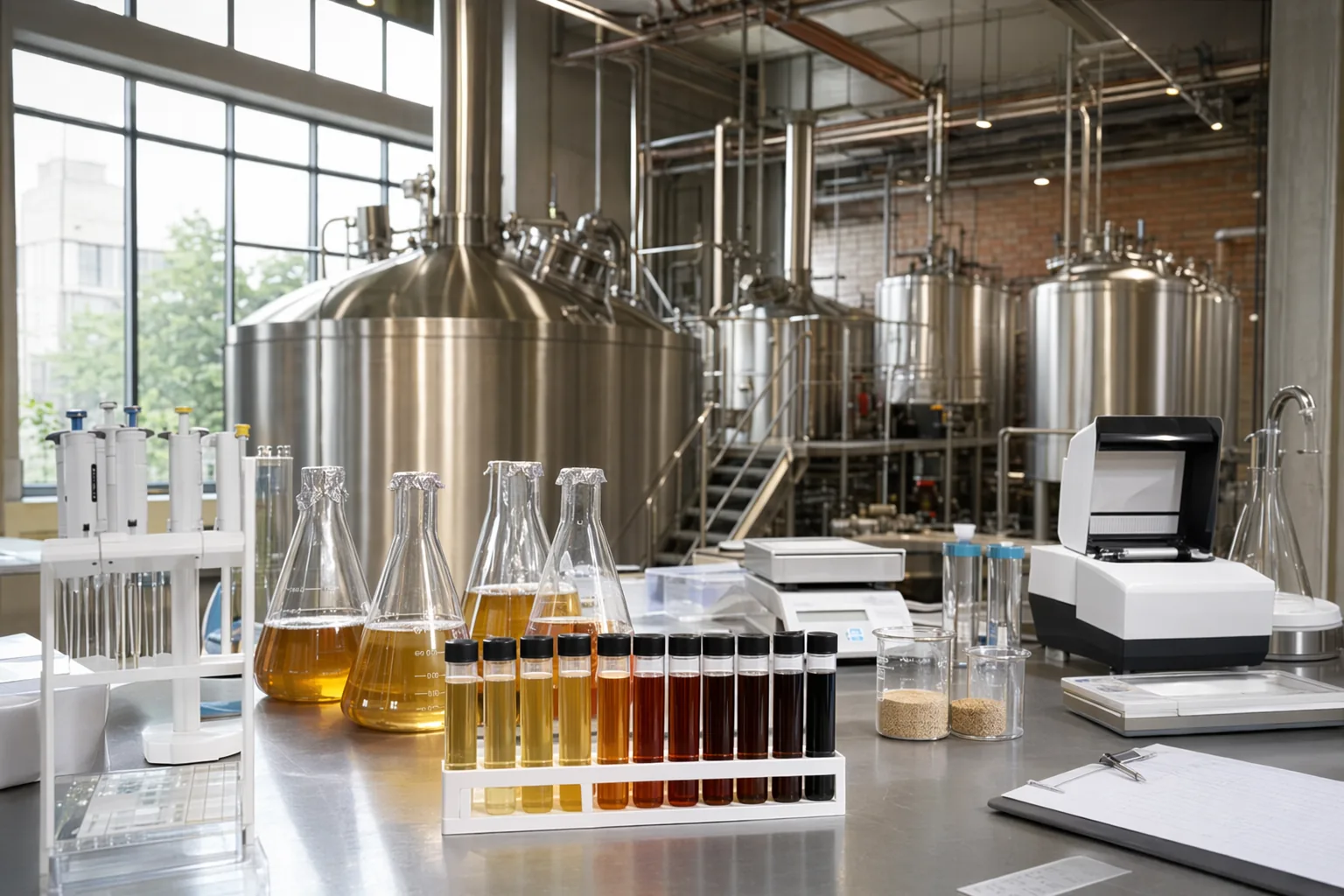
Clear Enzyme supports breweries, distilleries, and beverage manufacturers with formulation-focused brewing and winemaking enzymes for repeatable process performance.
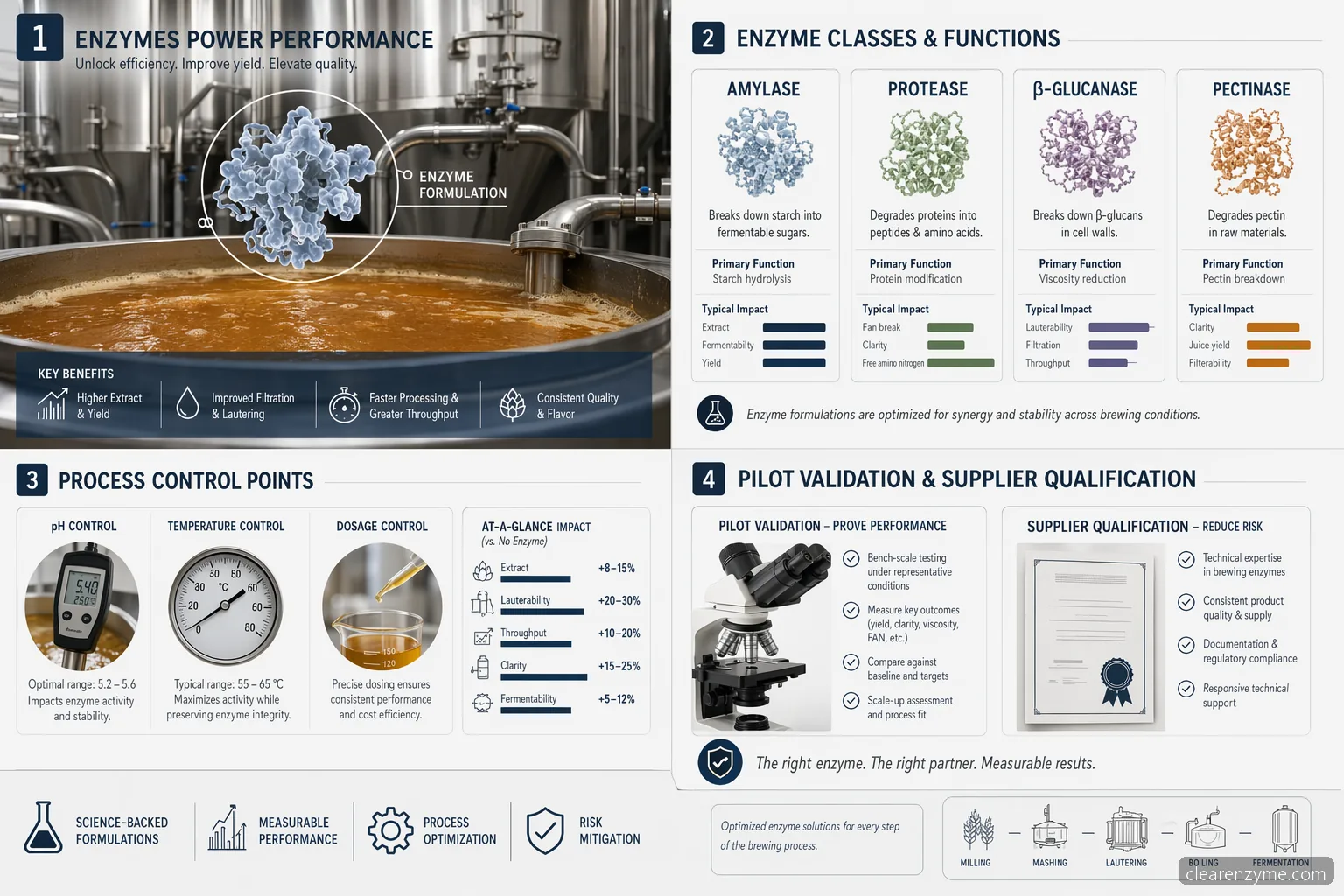
Industrial Buyer Context for Brewing Enzymes
When searching for brewing enzymes for sale, formulation teams usually need more than a catalogue item. They need an enzyme system that fits raw materials, mash schedule, fermentation goals, filtration equipment, and regulatory expectations for the target market. The brewing enzymes market includes alpha-amylase, glucoamylase, beta-glucanase, xylanase, protease, and clarification-focused preparations, each with different activity units and handling requirements. In commercial brewing, enzymes may help convert starch, reduce wort viscosity, improve fermentability, manage haze-forming proteins, and support consistent processing when malt quality or adjunct ratios vary. The role of enzymes in brewing process design is to create predictable biochemical changes under controlled conditions. For B2B sourcing, ask for technical documentation, pilot support, and batch traceability before committing to recurring purchases.
Define the substrate: malt starch, adjunct starch, beta-glucans, arabinoxylans, proteins, or haze precursors. • Match the enzyme to the process step: mash, cereal cooker, lautering, fermentation, maturation, or clarification. • Confirm whether the product is liquid, powder, granule, or stabilized blend.
Enzymes Used in Brewing Industry Formulations
The most common enzymes used in brewing industry applications are selected around conversion, runoff, attenuation, and clarity. Alpha-amylase breaks internal starch bonds and is often used during mashing or adjunct cooking where liquefaction is required. Glucoamylase brewing applications release fermentable glucose from dextrins, supporting high-attenuation beers, low-carbohydrate styles, or distilling mashes. Beta-glucanase and xylanase can reduce wort viscosity and improve lautering when barley, wheat, rye, oats, or unmalted grains contribute gums. Protease can modify protein fractions that influence foam, yeast nutrition, and chill haze; however, overuse may harm body or foam stability. A beer clarification enzyme is commonly validated through turbidity, chill haze, and filtration trials. The role of enzymes in brewing industry operations is therefore practical: targeted conversion, process control, and batch consistency.
Alpha-amylase: starch liquefaction and dextrin production. • Glucoamylase: fermentability increase and residual dextrin reduction. • Beta-glucanase and xylanase: viscosity control and lautering support. • Protease: protein modification and clarification support.
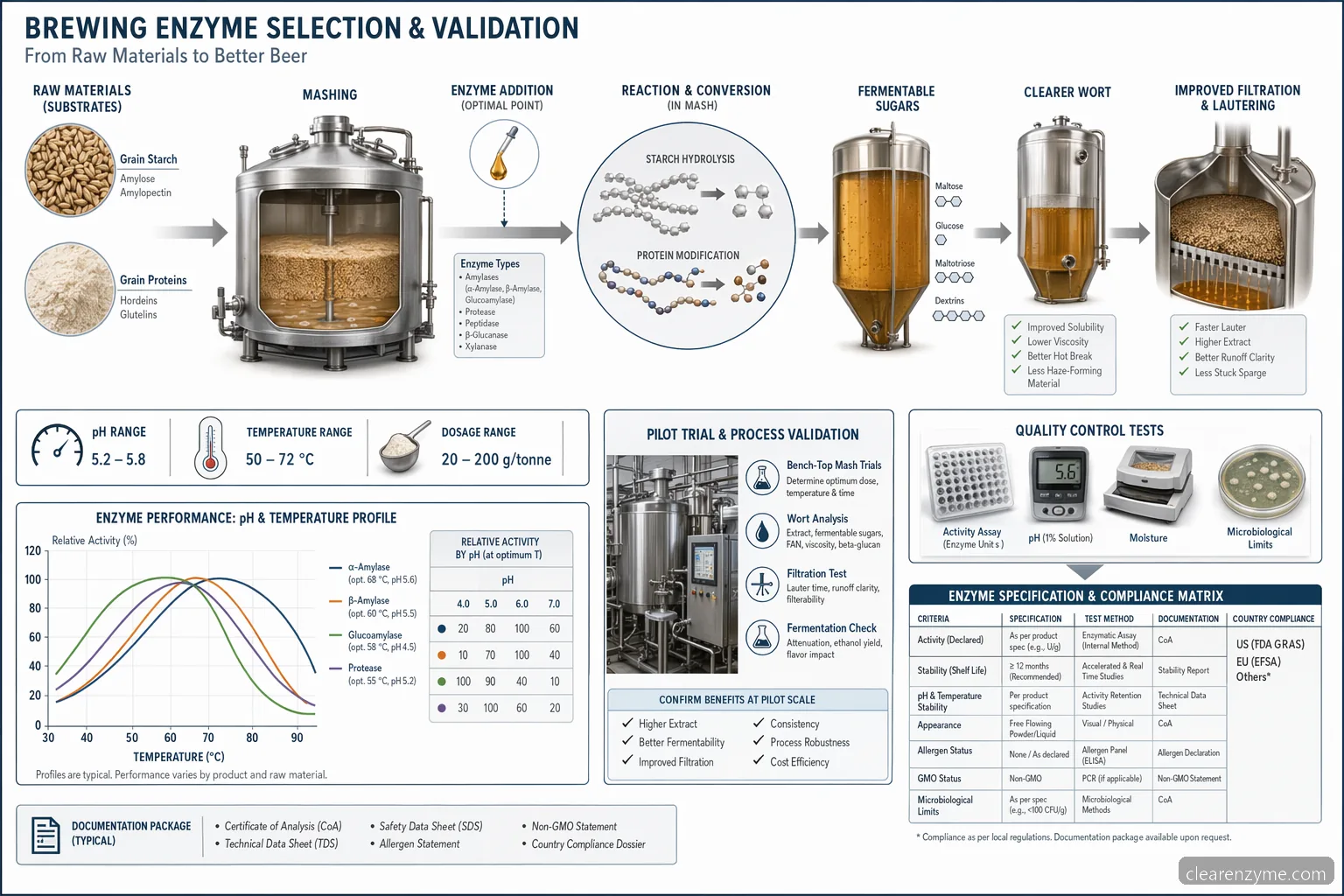
Process Conditions: pH, Temperature, and Dosage Bands
Recommended conditions depend on the enzyme source, activity method, formulation strength, and process design, so the supplier TDS should always govern final settings. As practical starting points, many alpha-amylase preparations are evaluated around pH 5.2 to 6.2 and 65 to 90°C, depending on thermostability. Glucoamylase brewing trials often run around pH 4.0 to 5.5 and 55 to 65°C in mash conversion, or at fermentation temperatures when approved for that use. Beta-glucanase may be screened near pH 4.5 to 5.8 and 40 to 60°C. Protease performance varies widely, but brewing trials often begin around pH 4.5 to 6.0 and 45 to 60°C. Initial dosage bands may range from 0.005% to 0.15% w/w on grist or adjunct, then narrow by activity units, extract gain, viscosity, and sensory impact.
Use the supplier’s declared activity units to convert lab dosage into plant addition rates. • Avoid assuming equivalence between two enzymes with the same generic name. • Validate thermal deactivation if carryover into later processing is a concern.
Pilot Validation and Quality Control Checks
Pilot validation should reproduce the brewery’s real raw materials, water profile, mash thickness, residence time, temperature ramp, yeast strain, and clarification method. A useful trial matrix compares a control against two or three enzyme dosages, with enough replication to distinguish process noise from enzyme effect. QC checks can include iodine conversion, extract yield, apparent attenuation, fermentable sugar profile, wort viscosity, beta-glucan level, FAN, pH drift, turbidity, chill haze, filterability, alcohol yield, and forced-aging sensory review. For a beer clarification enzyme, measure haze at cold storage temperatures and after heat-cold cycling where applicable. For glucoamylase brewing use, monitor residual carbohydrates and final gravity to avoid over-attenuation. Pilot data should be converted into cost-in-use, including enzyme cost, energy, tank occupancy, filtration throughput, yield change, and any impact on downstream stabilization.
Run a no-enzyme control for every trial set. • Record lot number, storage condition, addition point, contact time, and mixing method. • Assess flavor, foam, and mouthfeel before approving full-scale use.
Supplier Qualification for UK and US Brewing Operations
Buyers comparing brewing enzymes for sale UK, EU, US, or export supply should qualify the supplier before relying on a product in production. Documentation should include a Certificate of Analysis, Technical Data Sheet, Safety Data Sheet, recommended storage conditions, shelf life, activity test method, allergen or carrier information, and country-of-origin details where required by procurement. The us brewing enzymes market and wider brewing enzymes market include different logistics, labeling, and compliance expectations, so do not assume one specification automatically satisfies every plant. Ask how activity is standardized between batches, what change-control process applies to formulation updates, and whether technical support is available for pilot validation. Commercially, request packaging sizes that match usage rate, lead time, minimum order quantity, and temperature-controlled shipping needs if the enzyme is heat sensitive.
Review COA/TDS/SDS before sampling or purchase. • Confirm batch traceability and change notification practices. • Compare delivered cost, shelf life, and inventory risk alongside enzyme price. • Use supplier qualification to reduce scale-up and compliance risk.
Technical Buying Checklist
Buyer Questions
For adjunct-heavy brewing, start by identifying the adjunct and the bottleneck. Corn or rice adjuncts often require alpha-amylase for liquefaction and may benefit from glucoamylase for fermentability. Wheat, rye, oats, or unmalted barley may require beta-glucanase or xylanase to manage viscosity and lautering. Run a pilot trial with a no-enzyme control and measure extract, viscosity, runoff, attenuation, and sensory impact.
Do not compare only by price per kilogram or generic enzyme name. Request the TDS and COA for each product and review the activity method, recommended dose, carrier, stability, and application conditions. Then run side-by-side trials on the same wort or mash. Convert results into cost-in-use using dose, extract gain, filtration time, yield, tank occupancy, and any quality changes.
Some glucoamylase preparations are designed for mash conversion, while others may be suitable for fermentation use under defined conditions. Suitability depends on formulation, temperature, pH, alcohol tolerance, and regulatory requirements for the production site. Confirm the supplier’s TDS and intended use before trials. If fermentation addition is tested, monitor gravity decline, residual carbohydrates, alcohol yield, flavor, and risk of over-attenuation.
For a beer clarification enzyme, evaluate both immediate process performance and package stability. Useful checks include turbidity, chill haze, forced heat-cold cycling, filterability, dissolved oxygen, foam stability, and sensory review. Compare treated beer with an untreated control and any existing clarification program. Confirm that the enzyme does not create unacceptable changes in mouthfeel, aroma, foam, or label requirements.
Before purchase, request the Certificate of Analysis, Technical Data Sheet, Safety Data Sheet, shelf-life statement, storage conditions, activity test method, batch traceability, and carrier or allergen information. For supplier qualification, also ask about change-control procedures, packaging options, lead time, minimum order quantity, and technical support for pilot validation. These documents help procurement, quality, safety, and production teams evaluate fit.
Brewing & Winemaking Enzymes for Research & Industry
Need Brewing & Winemaking Enzymes for your lab or production process?
ISO 9001 certified · Food-grade & research-grade · Ships to 80+ countries
Frequently Asked Questions
What brewing enzymes should I evaluate first for an adjunct-heavy beer?
For adjunct-heavy brewing, start by identifying the adjunct and the bottleneck. Corn or rice adjuncts often require alpha-amylase for liquefaction and may benefit from glucoamylase for fermentability. Wheat, rye, oats, or unmalted barley may require beta-glucanase or xylanase to manage viscosity and lautering. Run a pilot trial with a no-enzyme control and measure extract, viscosity, runoff, attenuation, and sensory impact.
How do I compare two brewing enzymes for sale with different activity units?
Do not compare only by price per kilogram or generic enzyme name. Request the TDS and COA for each product and review the activity method, recommended dose, carrier, stability, and application conditions. Then run side-by-side trials on the same wort or mash. Convert results into cost-in-use using dose, extract gain, filtration time, yield, tank occupancy, and any quality changes.
Can glucoamylase brewing enzymes be added during fermentation?
Some glucoamylase preparations are designed for mash conversion, while others may be suitable for fermentation use under defined conditions. Suitability depends on formulation, temperature, pH, alcohol tolerance, and regulatory requirements for the production site. Confirm the supplier’s TDS and intended use before trials. If fermentation addition is tested, monitor gravity decline, residual carbohydrates, alcohol yield, flavor, and risk of over-attenuation.
What QC checks are important for a beer clarification enzyme?
For a beer clarification enzyme, evaluate both immediate process performance and package stability. Useful checks include turbidity, chill haze, forced heat-cold cycling, filterability, dissolved oxygen, foam stability, and sensory review. Compare treated beer with an untreated control and any existing clarification program. Confirm that the enzyme does not create unacceptable changes in mouthfeel, aroma, foam, or label requirements.
What documents should an industrial buyer request before purchasing brewing enzymes?
Before purchase, request the Certificate of Analysis, Technical Data Sheet, Safety Data Sheet, shelf-life statement, storage conditions, activity test method, batch traceability, and carrier or allergen information. For supplier qualification, also ask about change-control procedures, packaging options, lead time, minimum order quantity, and technical support for pilot validation. These documents help procurement, quality, safety, and production teams evaluate fit.
Related: Brewing enzymes market solutions for clearer, faster production
Turn This Guide Into a Supplier Brief Request a technical brewing enzyme consultation, sample plan, and COA/TDS/SDS review from Clear Enzyme. See our application page for Brewing enzymes market solutions for clearer, faster production at /applications/brewing-enzymes-market/ for specs, MOQ, and a free 50 g sample.
Contact Us to Contribute