Brewing Enzymes Market Trends for Better Brewery Troubleshooting
Troubleshoot brewing enzyme performance with market trends, dosage bands, pH/temperature guidance, QC checks, and supplier qualification.
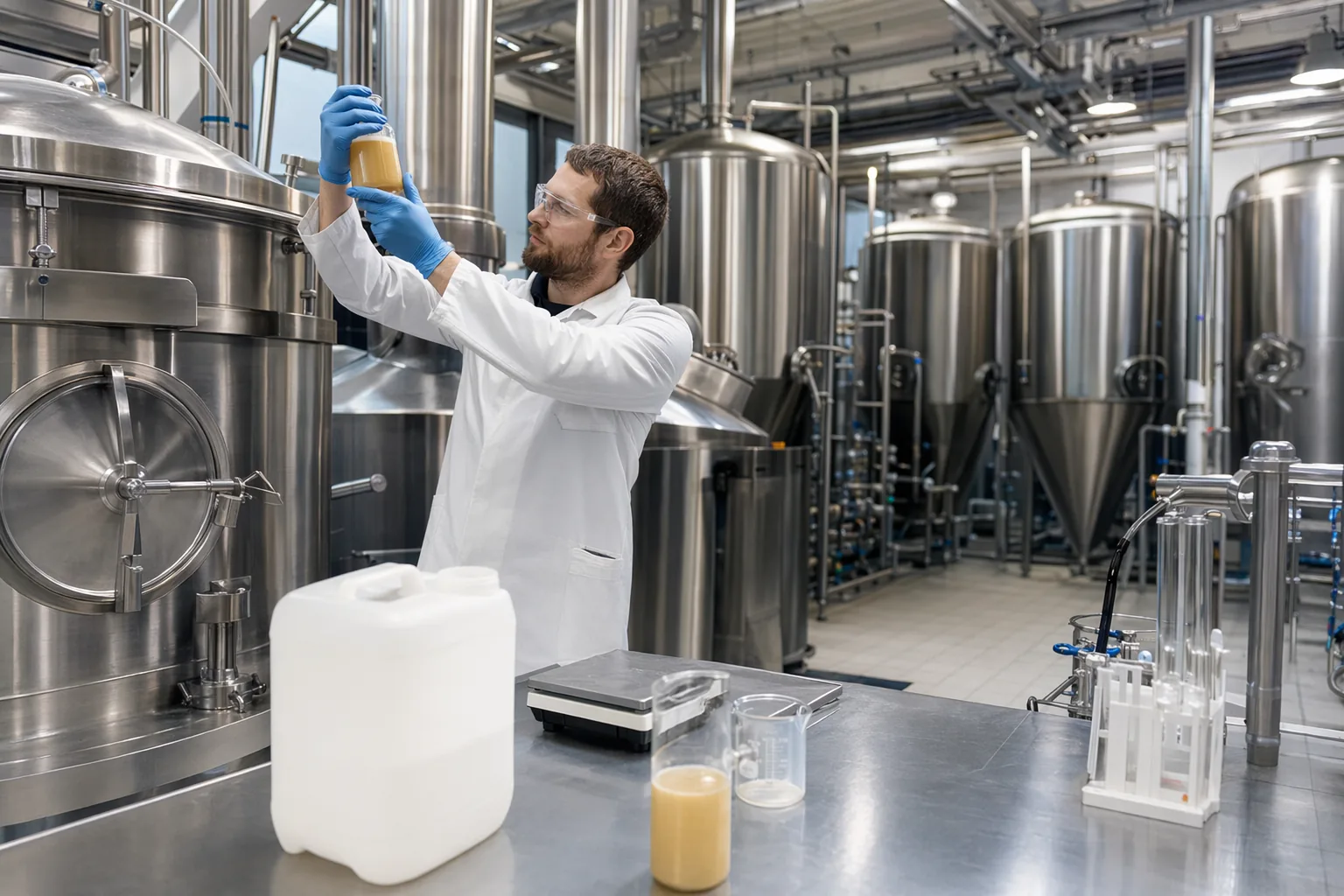
For breweries, distilleries, and fermentation processors, enzyme selection is no longer just a yield decision. It is a process-control decision tied to raw material variability, filtration speed, attenuation, clarity, and cost-in-use.
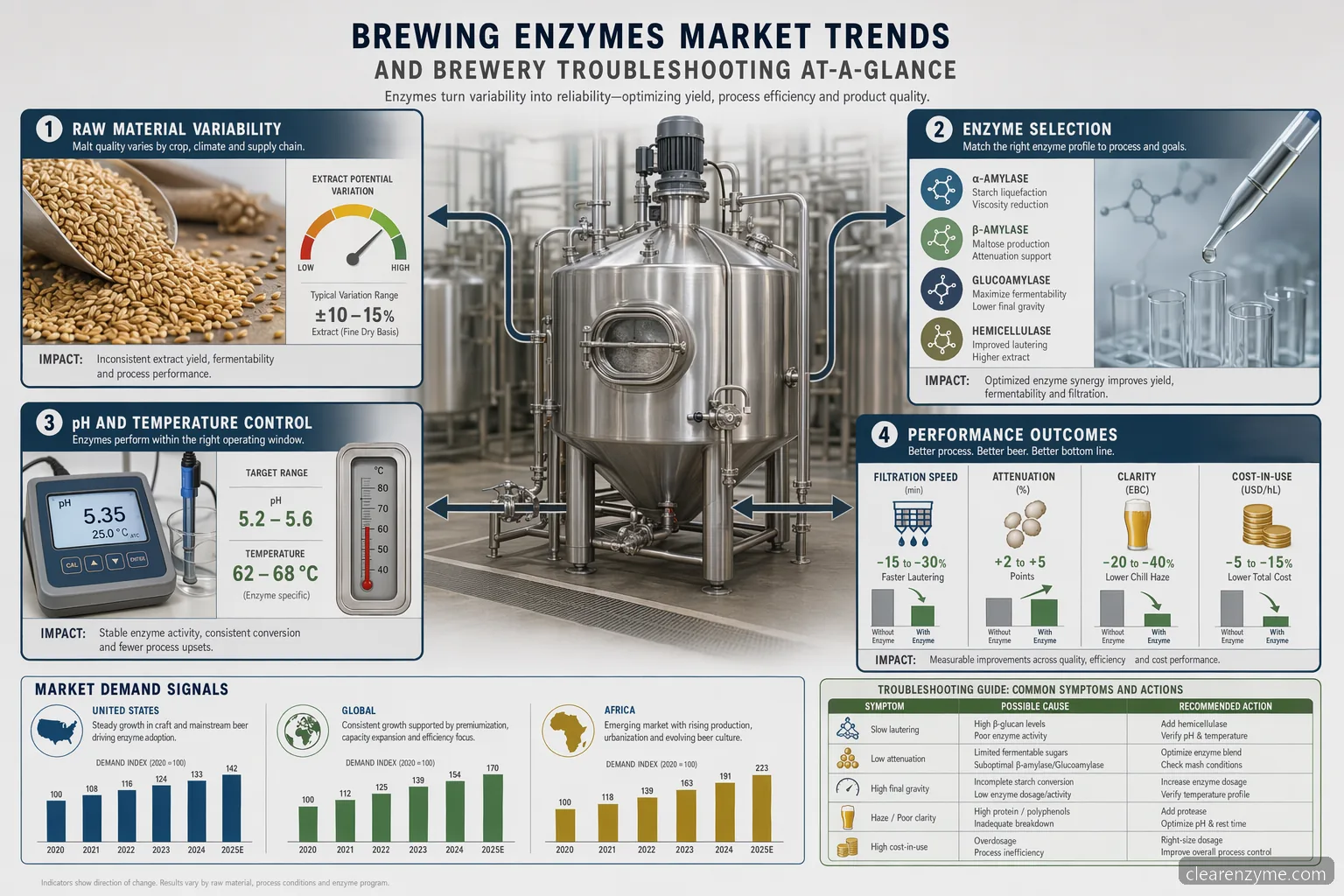
Why Market Trends Matter to Brewery Process Control
Brewing enzymes market trends are being shaped by higher raw-material flexibility, adjunct brewing, low-alcohol product development, and pressure to reduce filtration bottlenecks. For B2B buyers, the practical question is not only which enzyme is available, but whether it performs consistently under plant conditions. The brewing enzymes market now includes alpha-amylase, beta-glucanase, protease, pullulanase, glucoamylase, and beer clarification enzyme options for specific process targets. A reliable brewing enzymes market analysis should connect enzyme function to measurable outcomes: extract yield, wort viscosity, attenuation, filterability, haze risk, and tank turnaround. Avoid choosing only by unit price or activity declaration. Compare dosage range, matrix tolerance, storage stability, regulatory suitability for the destination market, and supplier technical support. If a process change affects malt blend, adjunct ratio, mash profile, or yeast strain, enzyme performance should be revalidated before full-scale adoption.
Use enzymes to solve defined process limits, not as generic additives. • Benchmark performance against current mash, lautering, fermentation, and filtration data. • Request TDS, SDS, COA, and application guidance before plant trials.
Dosage Bands for Common Brewing Enzyme Troubleshooting
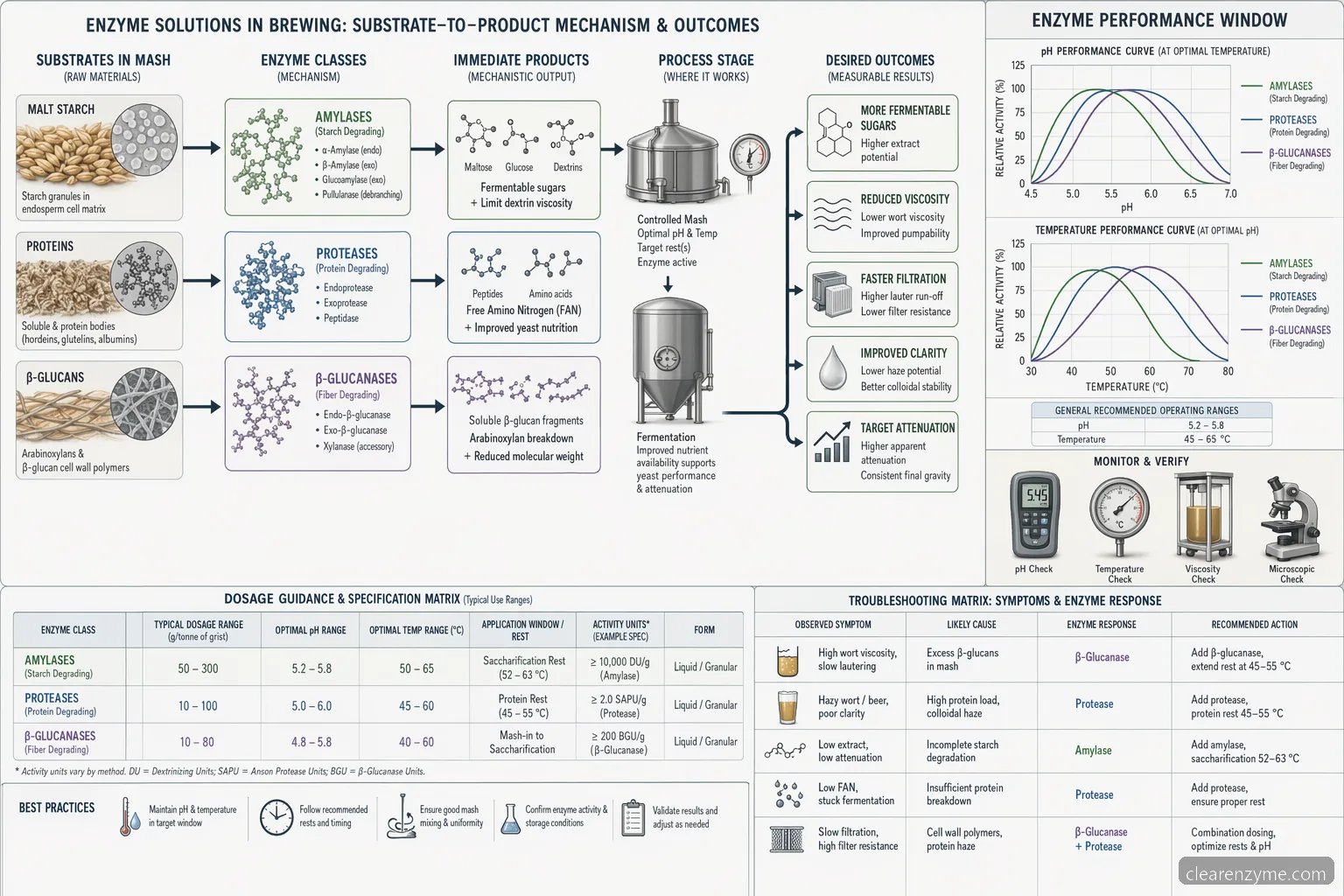
Typical industrial dosage bands vary by enzyme activity, substrate, and supplier formulation, so the Technical Data Sheet should always control final dosing. As a starting point for pilot trials, alpha-amylase may be assessed around 50-300 g per metric ton of grist, beta-glucanase around 20-150 g per metric ton of grist, protease around 20-120 g per metric ton, and glucoamylase brewing applications around 100-500 g per metric ton or per hectoliter basis as specified by the supplier. Beer clarification enzyme products used for haze control are often dosed in low ppm ranges during cold-side processing, but contact time and temperature are critical. Overdosing can create thin body, excessive fermentability, foam loss, or unnecessary cost. Underdosing can leave high viscosity, slow runoff, poor extract, or incomplete attenuation. The best approach is a stepped pilot trial with one variable changed at a time.
Start with supplier-recommended minimum, midpoint, and maximum trial rates. • Track extract, attenuation, turbidity, viscosity, and sensory impact. • Calculate cost-in-use per hectoliter, not just cost per kilogram.
pH and Temperature Windows That Drive Performance
Most brewing enzymes have practical operating windows rather than a single ideal point. Alpha-amylase commonly performs well in mash conditions near pH 5.4-6.0 and 65-85 degrees Celsius, depending on thermostability. Beta-glucanase often works best at lower mash rests, commonly pH 4.8-5.6 and 40-60 degrees Celsius. Protease activity may be useful around pH 4.5-5.5 and 45-60 degrees Celsius, but excessive protein breakdown can affect foam and mouthfeel. Glucoamylase brewing applications often require attention to pH 4.0-5.5 and moderate temperatures, or fermentation-side conditions depending on the product. Cold-side clarification enzymes may function at beer storage temperatures but need sufficient contact time. Troubleshooting should confirm actual tank pH and temperature, not only recipe targets. Small deviations can explain inconsistent performance, especially in high-adjunct mashes, raw grain usage, or fast-cycle production schedules.
Measure actual mash pH after grist hydration and adjustment. • Confirm enzyme addition point and residence time. • Avoid heat exposure beyond the supplier’s stated stability range.
Regional Demand Signals: US, Global, and African Markets
The global brewing enzymes market is influenced by breweries seeking higher extract efficiency, broader adjunct use, stable beer clarity, and lower processing losses. In the us brewing enzymes market, buyers often focus on product differentiation, hazy versus bright beer control, and consistent performance across craft and regional production. The african brewing enzymes market is frequently linked to local raw materials, sorghum or cassava adjunct systems, and the need to maintain brewhouse efficiency with variable grain quality. Brewing enzymes market size, brewing enzymes market share, and brewing enzymes market revenue reports can help procurement teams understand supplier capacity and category direction, but they should not replace technical validation. Market growth does not guarantee suitability for a specific brewery. The most useful trend insight is whether suppliers can support local application testing, documentation, logistics reliability, and scale-up troubleshooting across brewing, winemaking, and distilling applications.
Match regional market insight with local raw-material realities. • Confirm inventory lead times and cold-chain or storage needs. • Use market data as context, not as a substitute for plant trials.
Supplier Qualification and Pilot Validation Checklist
Before changing an enzyme program, qualify the supplier and the application pathway. Request a current COA for the batch, a TDS with activity definition and dosage guidance, and an SDS for safe handling and storage. Ask whether the enzyme is supplied as liquid or powder, what carriers are used, and how activity is maintained during transport. For pilot validation, run side-by-side brews using the same grist, water profile, yeast, mash schedule, and fermentation conditions. Record addition time, enzyme lot, dose, pH, temperature, contact time, and analytical outcomes. QC checks may include iodine conversion, wort viscosity, beta-glucan, FAN, extract, apparent attenuation, turbidity, filter differential pressure, alcohol, pH, and forced haze. The final purchasing decision should combine technical performance, documentation quality, regulatory suitability, supply continuity, and cost-in-use. A lower purchase price is not beneficial if it slows filtration or increases batch variability.
Require COA, TDS, SDS, and lot traceability. • Run pilot or production-scale A/B validation before conversion. • Evaluate total process impact, including yield, time, losses, and quality.
Technical Buying Checklist
Buyer Questions
Use brewing enzymes market analysis as a screening tool, then validate technically. Identify the process problem first: slow lautering, low extract, incomplete attenuation, haze, or filtration pressure. Shortlist enzymes by function, pH and temperature fit, documentation, and supplier support. Run controlled trials against current production data before approving any supply change.
Common causes include dosing on the wrong activity basis, adding the enzyme too late, using it outside the recommended pH or temperature range, poor mixing, short contact time, or raw-material variation. In troubleshooting, compare actual plant readings with TDS guidance. Check enzyme lot, storage history, addition point, mash profile, wort viscosity, attenuation, and turbidity.
Not necessarily. Industrial buyers should compare cost-in-use, not just price per kilogram. A higher-priced enzyme may reduce lautering time, improve extract, lower filtration losses, or reduce rework. A cheaper product can become costly if it requires higher dosage, has weaker documentation, creates inconsistent performance, or lacks supplier support for troubleshooting and scale-up.
Some enzyme families overlap across brewing, winemaking, and distilling, but process conditions differ. Substrate, pH, temperature, alcohol level, contact time, and quality targets must be checked for each application. A supplier may offer related enzyme platforms, but each use should have its own TDS review, pilot validation, QC plan, and regulatory suitability assessment.
Request a current COA, TDS, SDS, lot traceability information, storage and shelf-life guidance, activity definition, allergen or carrier information where relevant, and regulatory suitability for the intended market. For critical brewery use, also ask for pilot support, recommended QC checks, stability guidance, and a clear process for handling deviations or performance complaints.
Brewing & Winemaking Enzymes for Research & Industry
Need Brewing & Winemaking Enzymes for your lab or production process?
ISO 9001 certified · Food-grade & research-grade · Ships to 80+ countries
Frequently Asked Questions
How should a brewery choose enzymes when market reports show many options?
Use brewing enzymes market analysis as a screening tool, then validate technically. Identify the process problem first: slow lautering, low extract, incomplete attenuation, haze, or filtration pressure. Shortlist enzymes by function, pH and temperature fit, documentation, and supplier support. Run controlled trials against current production data before approving any supply change.
What are the most common reasons brewing enzymes fail in production?
Common causes include dosing on the wrong activity basis, adding the enzyme too late, using it outside the recommended pH or temperature range, poor mixing, short contact time, or raw-material variation. In troubleshooting, compare actual plant readings with TDS guidance. Check enzyme lot, storage history, addition point, mash profile, wort viscosity, attenuation, and turbidity.
Is the lowest-cost brewing enzyme usually the best commercial choice?
Not necessarily. Industrial buyers should compare cost-in-use, not just price per kilogram. A higher-priced enzyme may reduce lautering time, improve extract, lower filtration losses, or reduce rework. A cheaper product can become costly if it requires higher dosage, has weaker documentation, creates inconsistent performance, or lacks supplier support for troubleshooting and scale-up.
Can the same enzyme program support brewing, winemaking, and distilling?
Some enzyme families overlap across brewing, winemaking, and distilling, but process conditions differ. Substrate, pH, temperature, alcohol level, contact time, and quality targets must be checked for each application. A supplier may offer related enzyme platforms, but each use should have its own TDS review, pilot validation, QC plan, and regulatory suitability assessment.
What documentation should procurement request before supplier approval?
Request a current COA, TDS, SDS, lot traceability information, storage and shelf-life guidance, activity definition, allergen or carrier information where relevant, and regulatory suitability for the intended market. For critical brewery use, also ask for pilot support, recommended QC checks, stability guidance, and a clear process for handling deviations or performance complaints.
Related: Brewing enzymes market solutions for clearer, faster production
Turn This Guide Into a Supplier Brief Request a brewing enzyme trial plan, documentation review, and cost-in-use assessment from Clear Enzyme. See our application page for Brewing enzymes market solutions for clearer, faster production at /applications/brewing-enzymes-market/ for specs, MOQ, and a free 50 g sample.
Contact Us to Contribute